Unnamed drag strip (White City)
ClosedClosed No longer racing, but some of the track is still there.
Also known as Camp White Drag Strip; Avenue G Drag Strip
- Ed Cortopassi's Glass Slipper held both the gas and fuel strip records
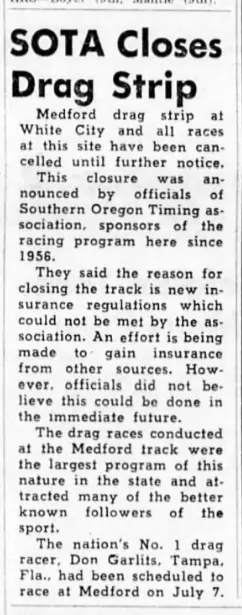
- Closed in 1962 over insurance rules two weeks before a planned Don Garlits appearance
- Warren Welsh and Bill Butler's Shoehorn set a strip record of 9.04 in 1962
- Raced
- 1953-62
- State
- Oregon
- What's left
- You can still spot it in aerial photos, or broken pieces of the track surface remain.
- Raced on
- A public road
- First race
- September 20, 1953 (one of the first)
- Last race
- June 1962
- Track
- 1/4 mile plus 1/4-mile shutdown
- Surface
- Blacktop road
- Location
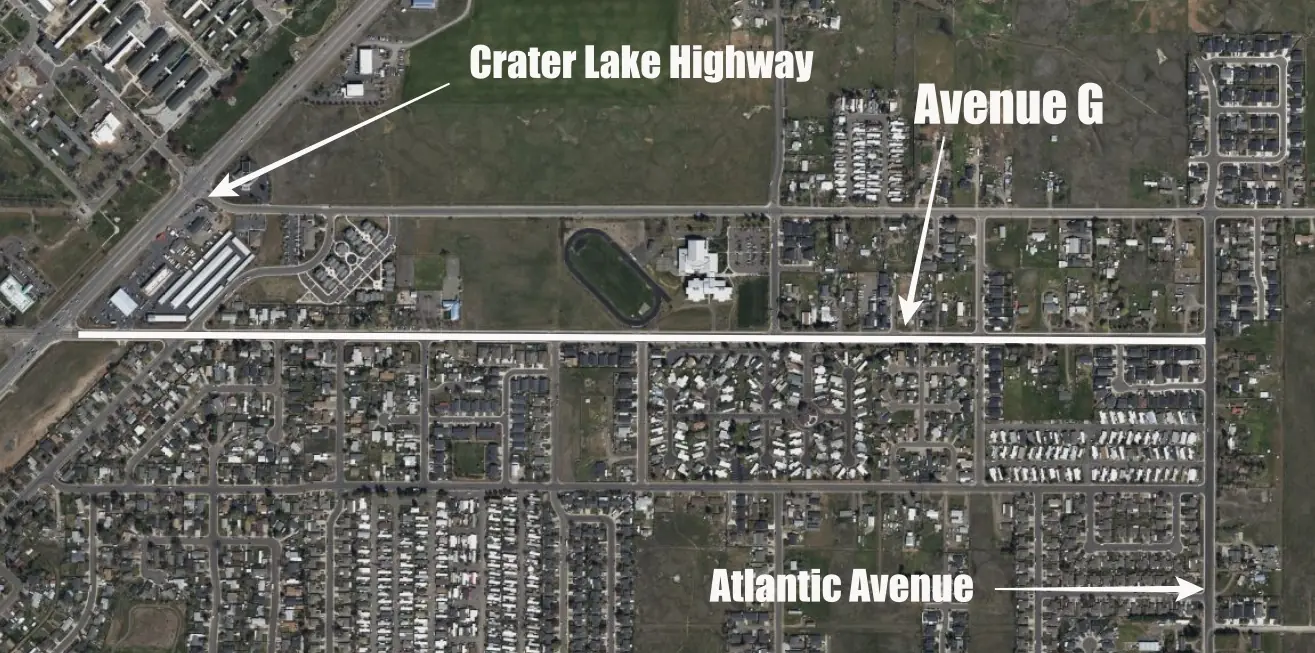
- Avenue G in west Camp White, White City, seven miles north of Medford off the Crater Lake highway
- People
- Southern Oregon Timing Association, sponsor and operator (1953-62)
- White City Realty Company, landowner
- Elevation
- 1,327 ft (405 m)
- Coordinates
- 42.43501, -122.84380
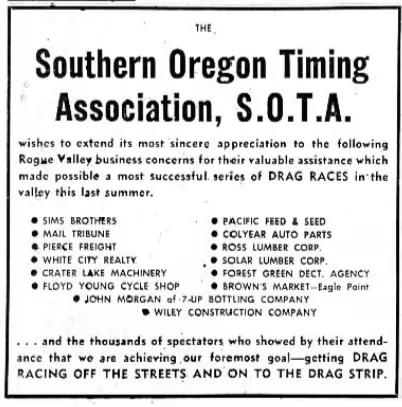
White City, north of Medford, was a WWII Army camp that became a Veterans Administration rehabilitation hospital called Camp White. Some news reports placed the races in Medford, but they ran in White City, on what was called the Camp White or Avenue G Drag Strip, seven miles north of Medford off the Crater Lake highway in west Camp White. The White City Realty Company let racers use a half-mile of private Avenue G, a quarter for racing and a quarter for shutdown. The Southern Oregon Timing Association sponsored the races, one of the first on September 20, 1953. Jerry Lausmann set the track record of 120.84 mph in 1954.
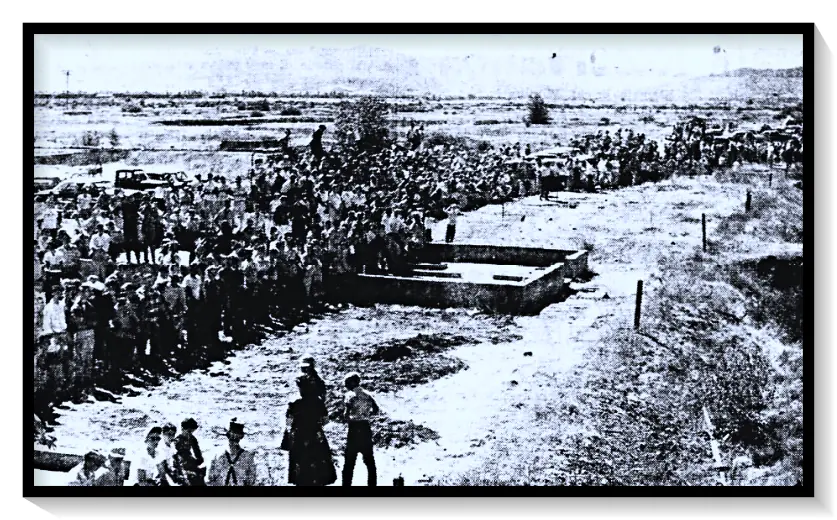
The 1956 season opened Sunday, July 15, with Floyd Young of Talent winning top eliminator at 96 mph on his 40 Flash motorcycle. On July 29, 2,000 people watched 71 racers, Sidney Thoreson of Roseburg ran 91 mph in a 1956 Corvette, and Skipper Walker of Grants Pass won top eliminator in his blown Olds-powered ‘40 Ford coupe. The August 19 race was timed with an electronic clock. The 1957 opener on May 26 had new clocks, a better spectator area, concessions, a new PA and restrooms. Bernie Miller and Bob Rudig of Grants Pass set a strip record of 121.62 mph in their blown Olds dragster as 3,000 fans watched 83 entries in 18 classes. On September 8, 1957, 5,000 spectators saw Ed Cortopassi drive the Glass Slipper to top eliminator and a 134.23 mph record. At the two-day Pacific Northwest Gas Championships on September 6-7, 1958, with $2,000 in bonds, trophies and merchandise at stake, Jay Cheatham of Sunnyvale, California, broke the record at 142.85 mph in time trials.
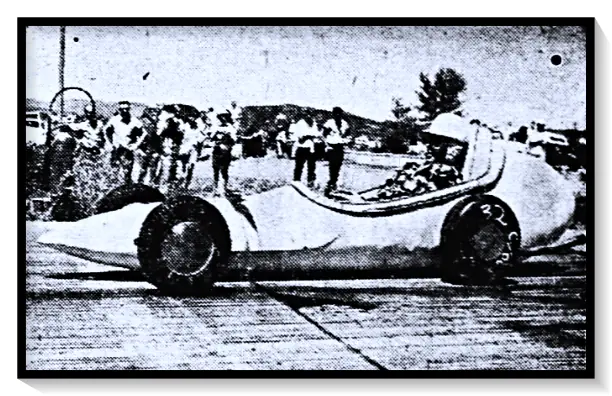
The eight-race 1959 season ran every other week from June 14 to August 23 and ended with the two-day Centennial gas championship on September 12-13, the first time the strip allowed fuel. Warren Welsh of Reno won top eliminator at 147.54 mph, Paul Sutherland of Walnut Creek, California, ran 144.92 in his blown Chrysler dragster, Cortopassi set the strip record of 160.87 mph in the Glass Slipper, and Marlo Treit of Beaverton set a motorcycle record of 123.62 mph on his twin-engine bike. At the third annual All-Charity drags on September 27, 1959, Noel Black was fastest at 138.46 mph on alcohol in the Roberts-Black-Medcalf A dragster. On August 13-14, 1960, 2,000 fans saw the Blanchard & Skeans A dragster win a four-foot trophy and $100. The September 10-11, 1960 event was billed as the 4th Annual North Western Gas Championships and Exhibition Fuel Runs, reflecting the fuel ban still in force on the West Coast and at NHRA tracks. The Glass Slipper then held both records, 155.17 mph on gas and 160.87 on fuel.
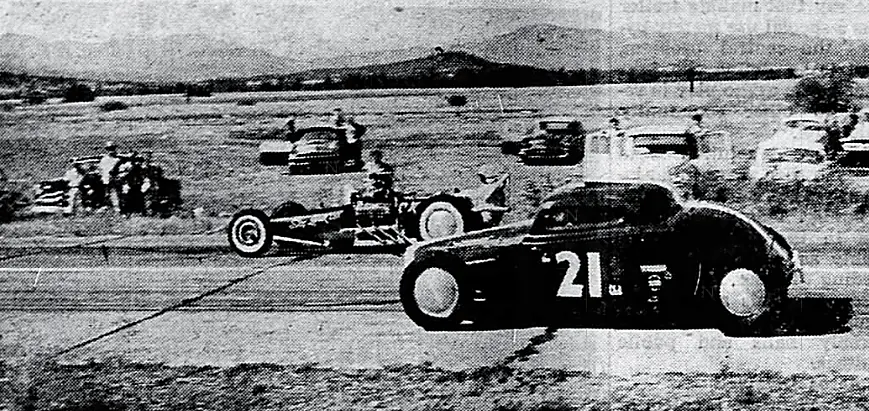
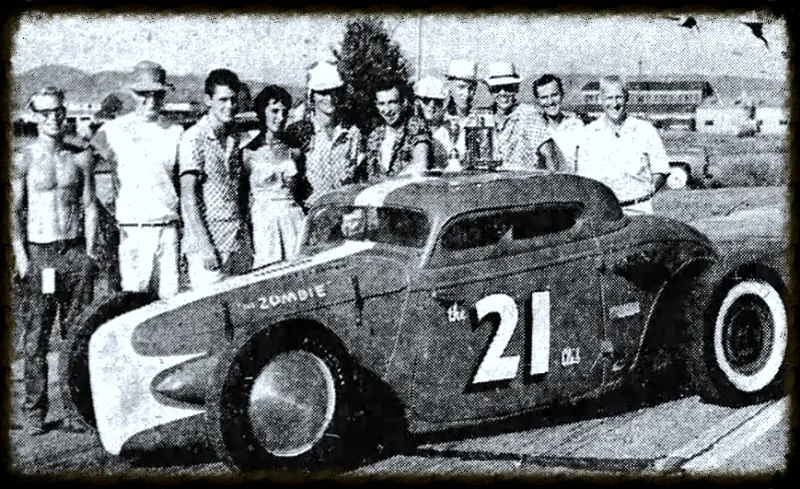
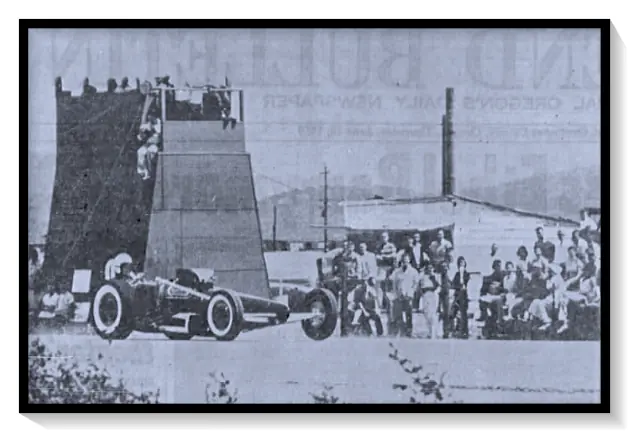
On July 16, 1961, Dave Skeans set an A/MR class record of 147.29 and 9.81 and got $300 toward a trip to the Indy Nationals, and Jim Fox ran 166.66 mph and a strip-record 9.32 in the Fox-Holding-Adair A/FD from Pomona, California. At the Northwest Gas and Fuel Championships on September 3-4, 1961, with 230 entries including Gary Cagle, Cortopassi raised the gas record to 160.42 mph and Fox matched the 169.81 mph strip record set a year earlier by Fred Anderson of Logan, Utah. At the two-day Spring Championship on June 9-10, 1962, 3,000 people saw Warren Welsh and Bill Butler’s rear-engined Shoehorn gas dragster from Reno set a strip record of 9.04 and 169.59, quicker than Fox’s fuel ET. In late June 1962 the timing association had to close the strip because it couldn’t meet new insurance rules, about two weeks before Don Garlits was due. In its time it ran the most exciting drag program in Oregon, and it came well before the Jackson County Sports Park strip (now Champion Raceway), which dates to about the mid-1980s. A racer from the early 1960s remembered a two-lane blacktop with four-foot ditches on each side, no timing lights, and a flag at each side of the finish. Starter Barney Oilcan of the Southern Oregon Wheelers would sometimes do a back flip as he dropped the flag, and plenty of drivers choked when he did.
More in Oregon
- Closed No longer racing, but some of the track is still there. Aurora Airport 1953-59
- Closed No longer racing, but some of the track is still there. Camp Adair 1953
- Closed No longer racing, but some of the track is still there. Clatsop County Airport (Warrenton) 1954
- Active Still racing today. Coos Bay Speedway 1990-present
- Closed No longer racing, but some of the track is still there. Corvallis Municipal Airport 1954
- Closed No longer racing, but some of the track is still there. Jackson County Speedway (Medford) 1954
- Closed No longer racing, but some of the track is still there. Klamath Speedway 1959
- Status unknown Closed, but nobody has checked how much of the site survives, or the exact spot was never found. Lakeview Dragstrip
- Active Still racing today. Madras Airport Drag Strip 1958-present
- Closed No longer racing, but some of the track is still there. Mahlon Sweet Airport (Eugene) 1950-52, 1955
- Closed No longer racing, but some of the track is still there. McMinnville Airport 1958-66
- Active Still racing today. Medford Dragstrip (Central Point) 1979-present