Vaca Valley Raceway (Vacaville)
ClosedClosed No longer racing, but some of the track is still there.
- First track in the country built for drag, oval and road racing together
- Ran 52 classes in 1958
- Romeo Palamides ran 180 mph in his California Kid jet dragster in 1961
- Raced
- 1958-72
- State
- California
- What's left
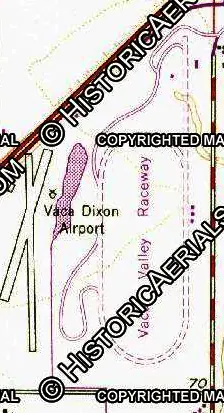
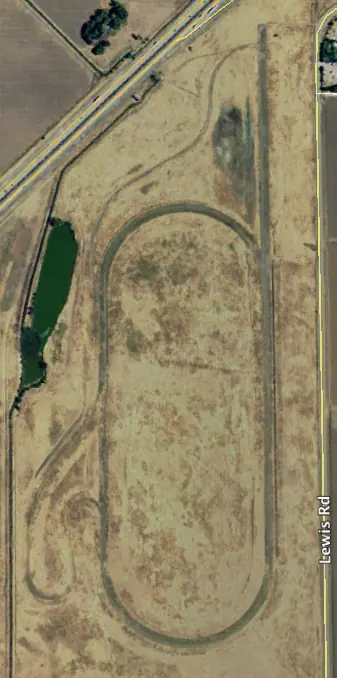
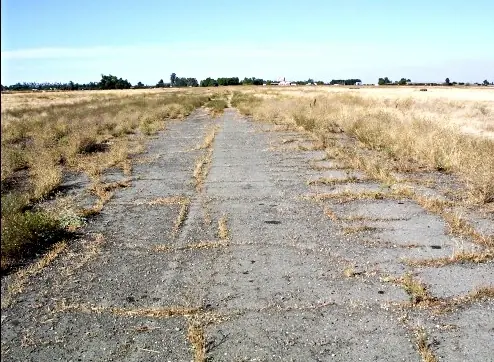
- You can still spot it in aerial photos, or broken pieces of the track surface remain.
- On the site today
- Track outline visible from the air; little tarmac remains
- Raced on
- Built as a drag strip
- Track
- 3,500 feet
- Surface
- Blacktop
- Location
- Northwest corner of Lewis and Weber Road, just south of old Highway 40, three miles east of the Nut Tree Restaurant
- People
- Herb LeClaire, strip operator (from Labor Day 1956)
- Harry Burdg, strip operator (from Labor Day 1956)
- Elevation
- 78 ft (24 m)
- Coordinates
- 38.40883, -121.89981
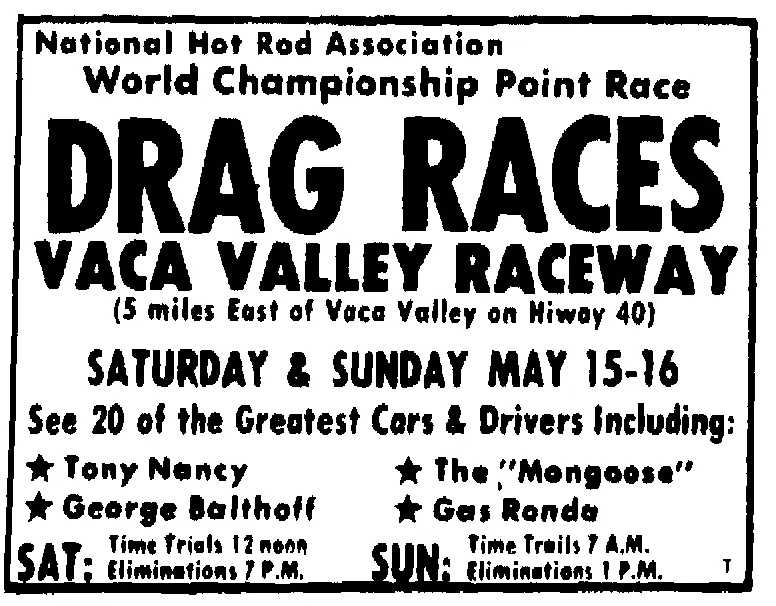
$500,000 went into building this multi-purpose raceway, with a drag strip, a 1.25-mile oval and a 2.1-mile road course. Newspapers at the time put it three miles east of the Nut Tree Restaurant off Highway 40 near Vacaville, on vacant land at the northwest corner of Lewis and Weber Road, just south of what was then Highway 40. It was the second track in Northern California built for sports car racing and the first in the country to combine facilities for all three kinds of racing. It had parking for 15,000, but the paving was poor from the start.
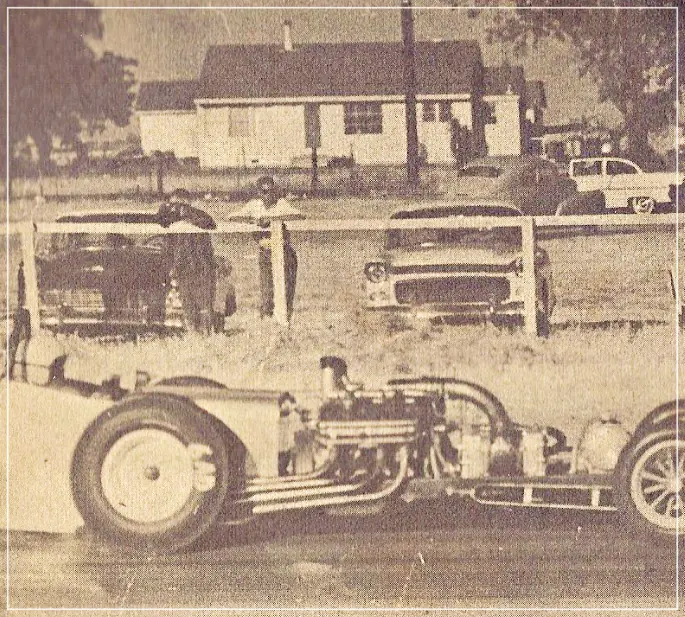
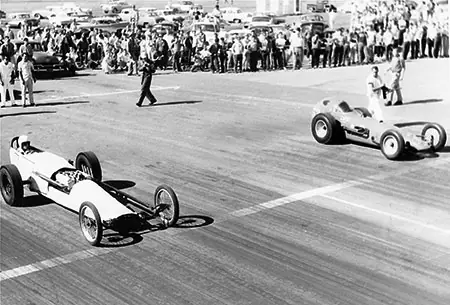
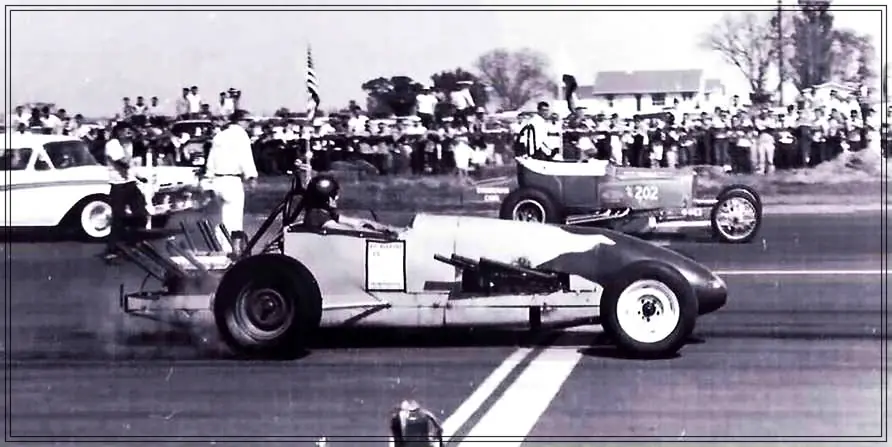
In his Drag News column of February 22, 1958, Al Caldwell wrote that Herb LeClaire and Harry Burdg ran the 60 by 3,500-foot blacktop strip with the easy confidence that comes from success. They had run it personally since Labor Day 1956, by and for the racers, with crews that were part paid and part volunteer. Clubs taking part included the Berkeley Rod Knockers, Concord Accelerators, Elmwood Auto Club and Oakland Pharoahs. The strip ran under Cal-Neva sanction with 52 classes, which Caldwell thought might be a record. He also listed problems. It badly needed a return road, which the managers knew, though fans enjoyed watching the dragsters parade back from the far end. The restrooms were inadequate with long lines, pit crews sometimes wandered into dangerous spots, and starter Ted Johnson did good work but needed relief more often. Emery Cook told him the strip ran a good race for its setup, with too many people in the pits but good treatment and good competition, and that his team had some traction trouble on the surface but was running Bruce slicks.
On December 17, 1958, 1,700 people watched 250 cars race, and Paul Sutherland of Walnut Creek won top eliminator at 159 mph. Art Chrisman set a strip record of 176.43 mph on May 24, 1959. At the same race Red Case broke his neck when he shot over the embankment at the end of the track, and he died of his injuries several days later. Bud Butler set a national record for Chevrolet-powered dragsters at 170.43 mph in the Glass Slipper on November 22, 1959. Chrisman won top fuel at the two-day West Coast Championship Drag Races on April 23-24, 1960, averaging 171.7 mph. Night racing started in 1960. On August 5, 1961, Romeo Palamides ran 180 mph in his California Kid jet dragster, and the next week the track laid some new asphalt. The track closed when the surface wore out to the point it couldn’t be raced on. Its outline still shows in aerial photos, but little tarmac remains.
More in California
- Nothing left No longer racing, and nothing of the track remains. Alta Airport (Orosi) 1957-59
- Nothing left No longer racing, and nothing of the track remains. Antelope Valley Drag Strip (Palmdale) 1958-59
- Active Still racing today. Bakersfield Drag Strip (Famoso) 1952-present
- Closed No longer racing, but some of the track is still there. Ballico Airport 1959-62
- Active Still racing today. Barona 1/8-Mile Drag Strip (Lakeside) 2003-present
- Closed No longer racing, but some of the track is still there. Bishop Drag Strip 1963-68, 1974
- Closed No longer racing, but some of the track is still there. Brotherhood Raceway Park (Terminal Island) 1976-84, 1993-95
- Closed No longer racing, but some of the track is still there. Buchanan Field Airport (Concord) 1949
- Closed No longer racing, but some of the track is still there. California Dragway/Auto Club Dragway (Fontana) 2002-20
- Nothing left No longer racing, and nothing of the track remains. California State Fairgrounds (Sacramento) 1958-60
- Nothing left No longer racing, and nothing of the track remains. Carlsbad Raceway 1964-2004
- Closed No longer racing, but some of the track is still there. Champion Speedway (Brisbane) 1970-79