Speedway Park/Edmonton International Speedway
Nothing leftNothing left No longer racing, and nothing of the track remains.
Also known as International Speedway Park
- Jerry Ruth beat Don Garlits in a match race before 22,000 fans on May 18, 1969
- Don Prudhomme ran an unofficial funny car world record of 6.79 at 210.23 mph in 1971
- Promoters Gordon Jenner and Ron Hodgson drew 75,000 people in 1974
- Raced
- 1967-82
- Province
- Alberta
- What's left
- The site was redeveloped and nothing of the strip remains.
- Raced on
- Built as a drag strip
- First race
- May 21, 1967
- Last race
- 1982 season
- Location
- 127th Street and 139th Avenue, Edmonton
- People
- Booth brothers, builders (1965-67)
- Tom Fox, headed operating group (1972-)
- Gordon Jenner, drag racing promoter (1974)
- Ron Hodgson, promoter (1974)
- Graham Light, general manager (1977-82)
- Qualico Developments, landowner (1978-82)
- Sanction
- NHRA
- Elevation
- 2,228 ft (679 m)
- Coordinates
- 53.60532, -113.55517
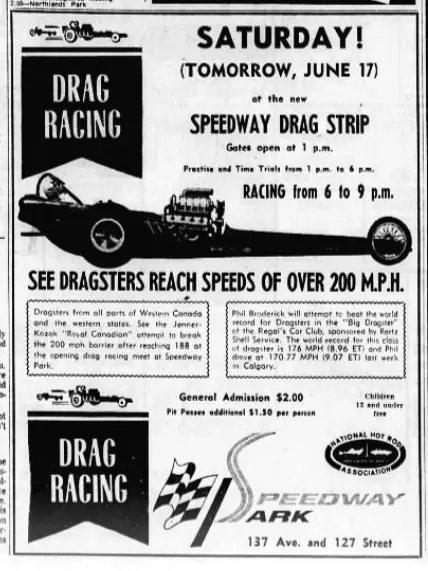
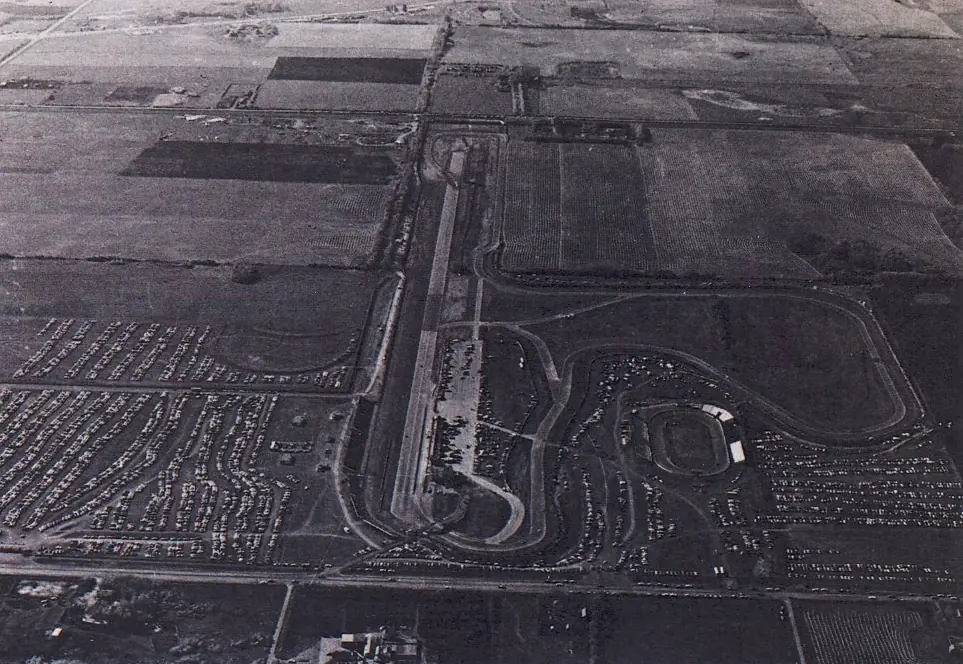
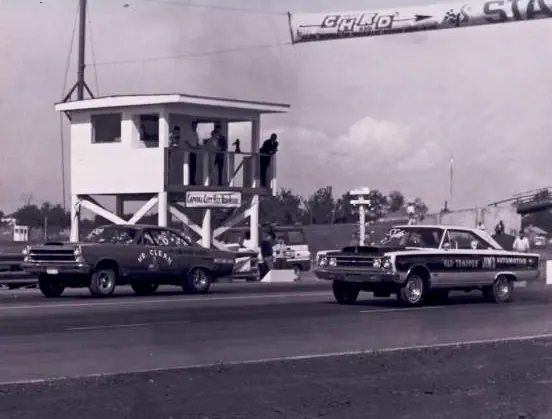
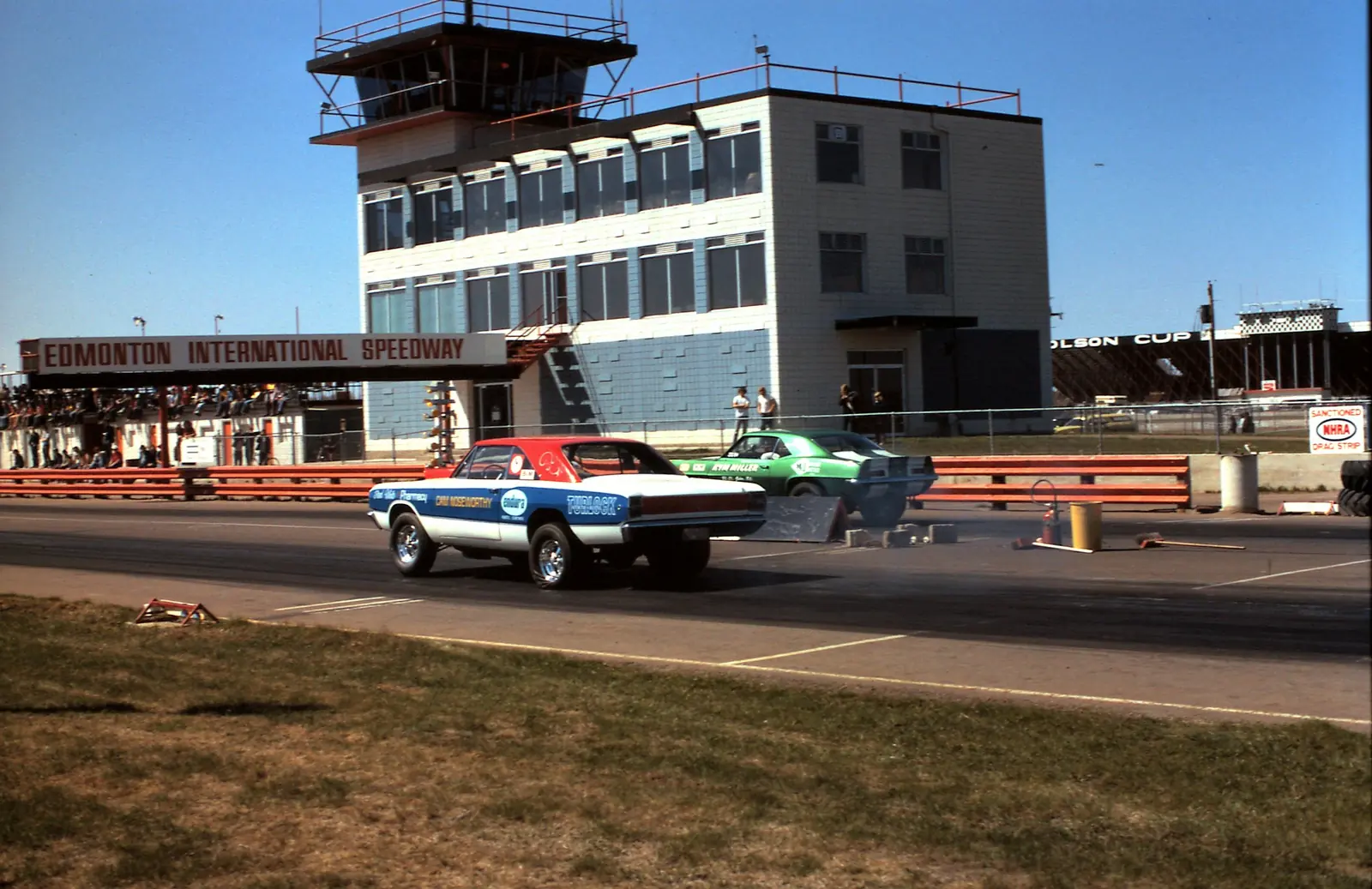
A dirt oval ran on this site in the 1940s, and in 1952 it was rebuilt as a half-mile asphalt oval called Speedway Park. In 1965 the Booth brothers announced plans for a two-mile road course, a paved half-mile oval and a drag strip on 155 acres at 127th Street and 139th Avenue, at an estimated $870,000. The drag strip got a 4,000-seat grandstand and an $88,000 Texaco-sponsored timing tower and clubhouse. Some racers tested in early May 1967, and the strip officially opened with its first race on May 21. A mid-afternoon squall didn’t dampen more than 15,000 fans, who watched Nick Kozak beat Frank Rupert in top fuel into a stiff headwind that held speeds down. Rain dogged the first season and kept forcing date changes. NHRA still gave the new strip a divisional race on October 8-9, 1967, and more than 18,000 people saw Larry Hendrickson beat Jerry Ruth in top fuel.
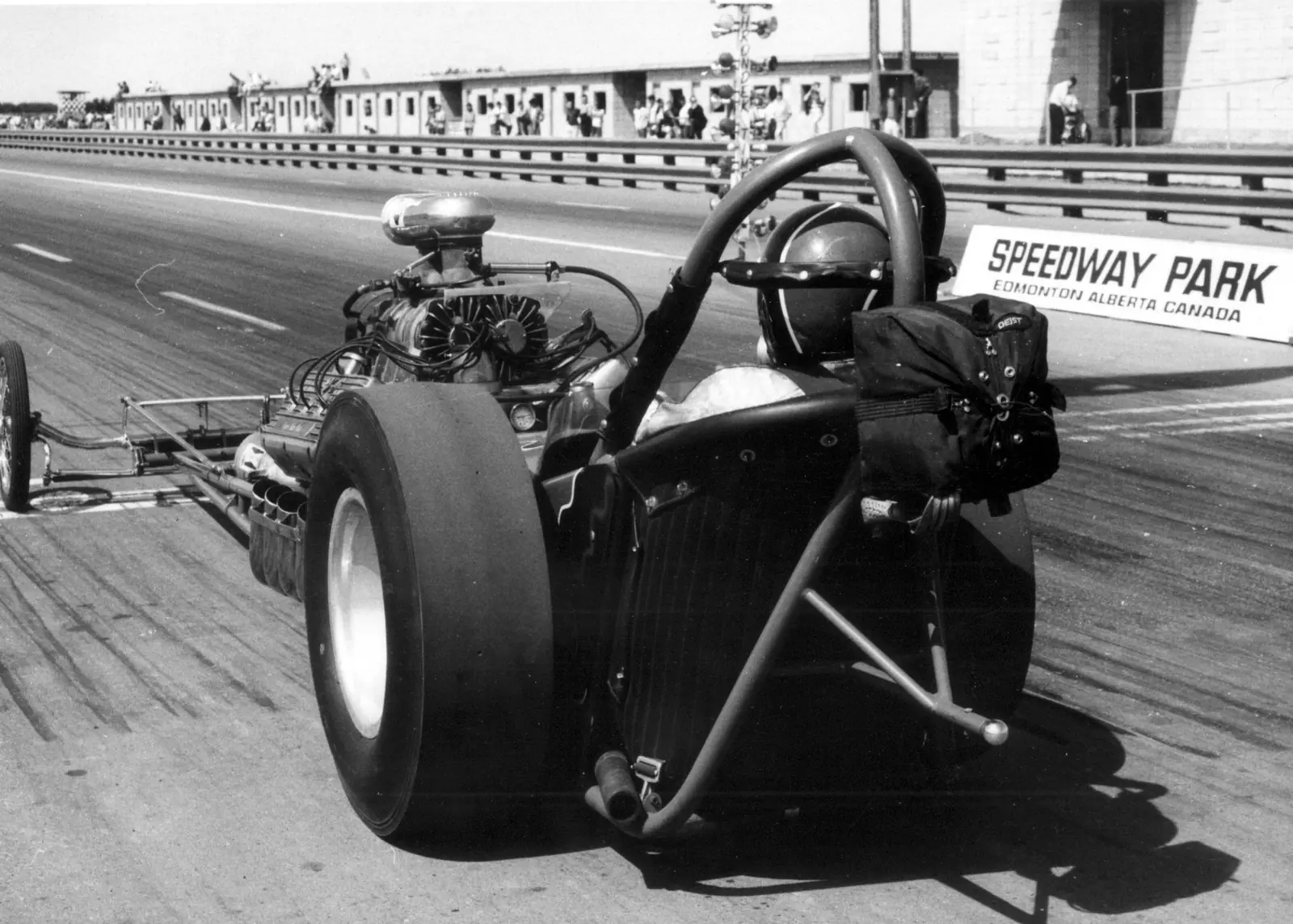
About 15,000 fans watched Ruth smash the track record with 7.11 seconds at 214.79 mph at the Canadian Open on June 30, 1968. Rain washed out that August’s NHRA divisional points meet, disappointing 500 entries and 6,000 fans, but it ran the next weekend and Ruth won top fuel with a record 219.50 mph. On May 18, 1969, before 22,000 fans, Ruth met Don Garlits in a best-of-three match race and won when Garlits blew his engine on the second run. Ruth also set a track record of 7.06.
Days before the August 9-10, 1969 NHRA divisional, six top fuel and seven AA/GD racers said they would boycott. They accused Speedway Park officials of refusing to cooperate with the Northwest chapter of the United Drag Racer’s Association and were angry that purses had been cut from the year before. In the end a full field of fuelers came, but few if any gas dragsters. A downpour stopped racing before the top fuel final, so Ruth and Ken Achs of Saskatoon split the purse. Ruth had set a track record of 6.89 against Herm Peterson in the first round, and Peterson had the meet’s top speed at 216.86 mph. About 7,000 people watched the final day.
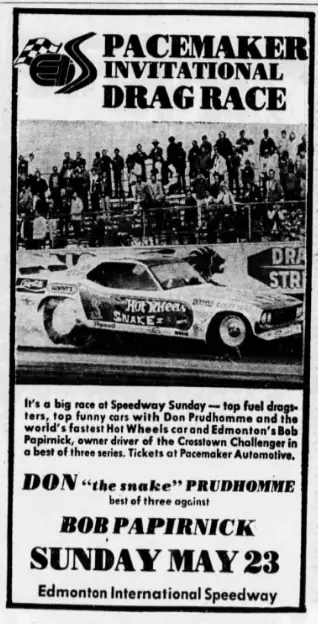
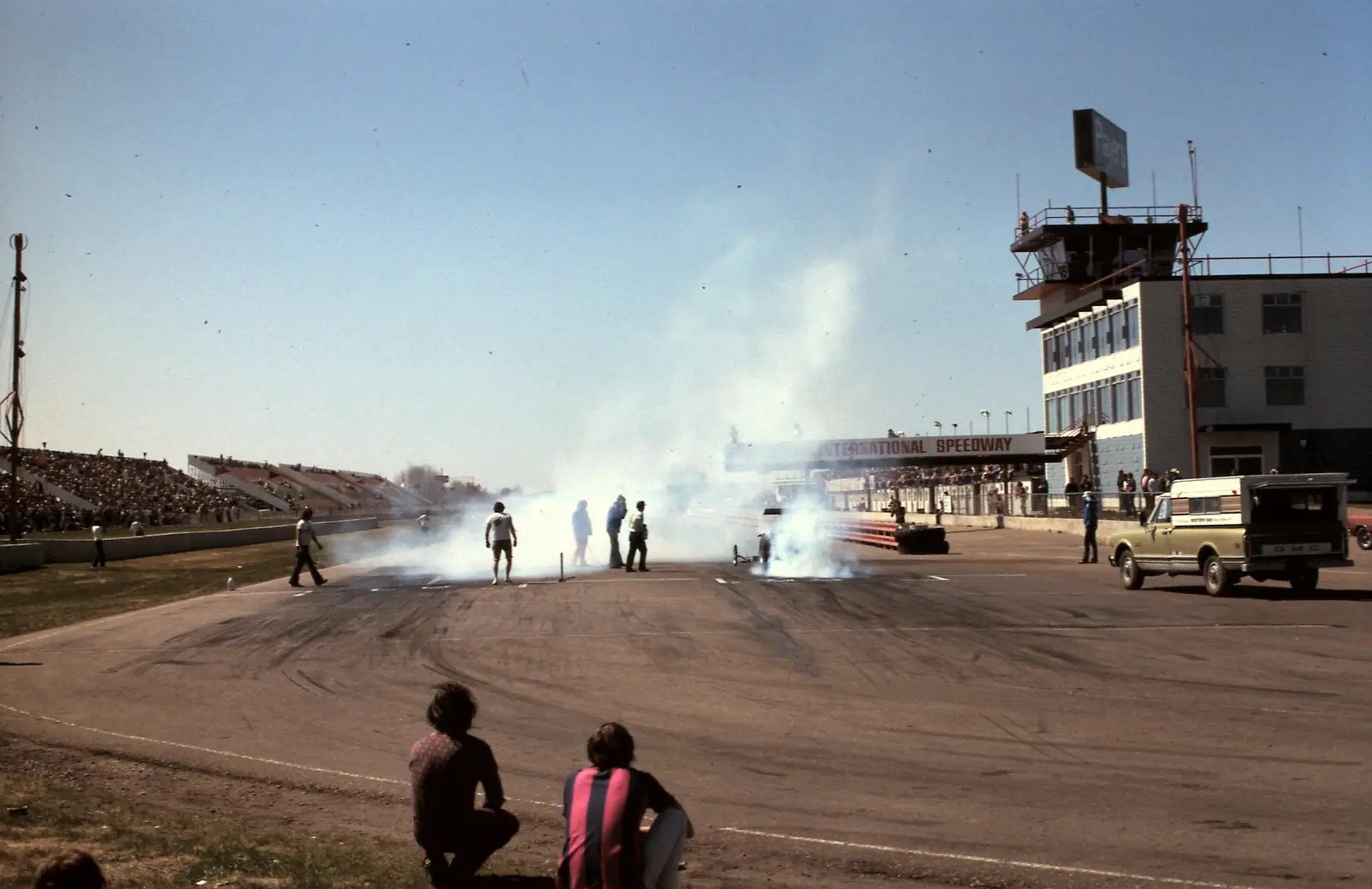
The complex became International Speedway Park in 1970, and on August 30 that year Don Kohut of Calgary set a Canadian record of 6.68 seconds. A sale to the Edmonton Exhibition Association was considered in 1971 but never happened. That year the name changed to Edmonton International Speedway and prize money went up to keep racers happy. On May 23, 1971, Don Prudhomme ran 6.79 at 210.23 mph, which newspapers called an unofficial funny car world record because it wasn’t NHRA-sanctioned. Gary Egbert set a Canadian record of 6.77 seconds at 223.88 mph in his AA/F dragster before 8,500 fans on July 4, 1971, then improved it to 6.70 at 225.56 on October 11.
In 1972 a group headed by Tom Fox took over the financially troubled complex. The drag strip made money while the Can-Am road course lost heavily, and Fox put the whole operation on firmer footing and renewed the NHRA sanction. In 1974 the track hosted an NHRA regional WCS race, the Labatt’s Invitational Cup. Jerry Ruth won top fuel, beating Herm Petersen in the final with a 6.11 at 233 mph, and also took funny car, with Frank Hall driving his funny car. Gordon Jenner came on as drag racing promoter in 1974 with help from Ron Hodgson, and the two drew an impressive 75,000 people. But the owners were always tempted to sell the land for development.
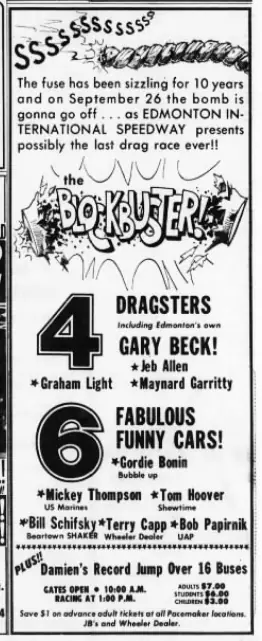
Top fuel driver Graham Light became general manager in 1977, hoping to keep the strip open. The city’s decision not to annex the land helped, and in 1978 Light figured it might have bought another three years. Qualico Developments bought the land that year. Jeb Allen won top fuel and Gordie Bonin won funny car at the NHRA WCS race in late May 1979. That year a bracket racer in an econo dragster was killed when he hit a stalled car past the finish line. Once the city annexed the land, the owners said racing would end after 1981. Ted Gibson was killed when he crashed his jet dragster on August 26, 1981, the track’s second fatality. Qualico then leased the strip back to the Speedway for 1982, since it didn’t yet have city approval for its housing and commercial plans and didn’t want the land sitting idle as a target for vandals or outlaw racers. That angered neighbors, who were tired of fourteen years of racing noise. The final season had only four major events plus weekly brackets. The city sped the end by raising the tax assessment and charging for city crews to cut weeds. Those two costs came to $46,000, too much to carry, and Light gave up.
Video
More in Alberta
- Active Still racing today. Area 53 Raceway (Forestburg) present
- Nothing left No longer racing, and nothing of the track remains. Calgary Highway Drag Racing 1958-60
- Closed No longer racing, but some of the track is still there. Canadian Forces Base Suffield 1973-74
- Active Still racing today. Central Alberta Raceways (Rimbey) present
- Closed No longer racing, but some of the track is still there. De Winton Airfield 1956
- Status unknown Closed, but nobody has checked how much of the site survives, or the exact spot was never found. Edmonton Highway Drag Racing 1958-62
- Closed No longer racing, but some of the track is still there. Fairview Municipal Airport ca. 2000-12
- Status unknown Closed, but nobody has checked how much of the site survives, or the exact spot was never found. Fort Macleod Airport 1968, 1998-99
- Nothing left No longer racing, and nothing of the track remains. Fort McMurray Highway Drag Racing 1977
- Status unknown Closed, but nobody has checked how much of the site survives, or the exact spot was never found. Grande Prairie Airport Drag Wars 2002-3, 2005, 2007, 2009
- Nothing left No longer racing, and nothing of the track remains. High Country Raceway (Lethbridge) 1985
- Nothing left No longer racing, and nothing of the track remains. Lincoln Park Airfield (Calgary) 1962