Shuffletown Drag Strip (Charlotte)
ClosedClosed No longer racing, but some of the track is still there.
- Built at the Charlotte police department's request to get hot rodders off the street
- Don Garlits and Tommy Ivo match raced here in 1969
- Closed after neighbors had the area annexed into Charlotte to use its noise ordinances
- Raced
- 1958-91
- State
- North Carolina
- What's left
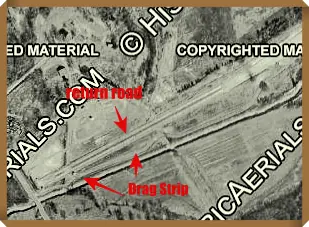
- You can still spot it in aerial photos, or broken pieces of the track surface remain.
- On the site today
- City park (the track is still there)
- Raced on
- Built as a drag strip
- First race
- 1959
- Track
- 1/5 mile, shortened to 1/8 mile in 1964
- Surface
- Dirt, paved in 1964
- Location
- Highway 16, nine miles west of Charlotte, beside a creek
- People
- Tom Ferrell, owner (1972)
- "Scratch" Whisnant, promoter
- Elevation
- 651 ft (198 m)
- Coordinates
- 35.31697, -80.94030
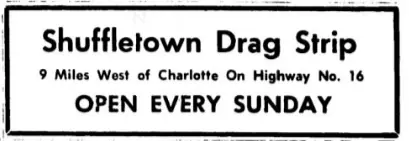
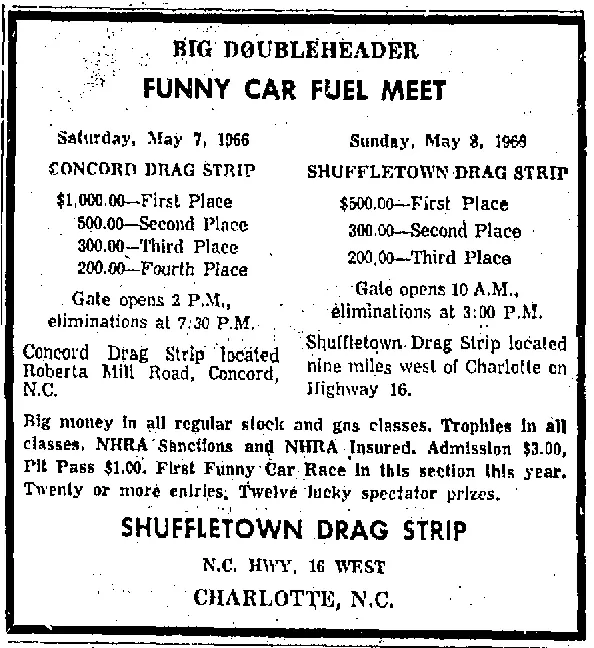
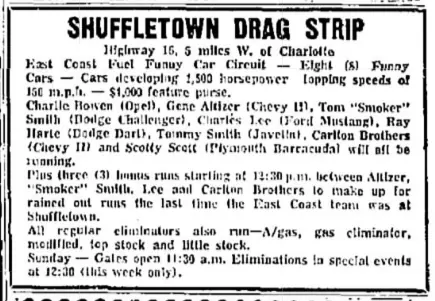
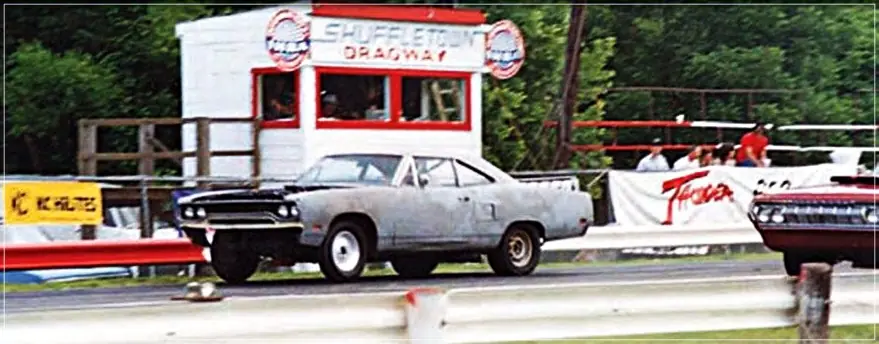
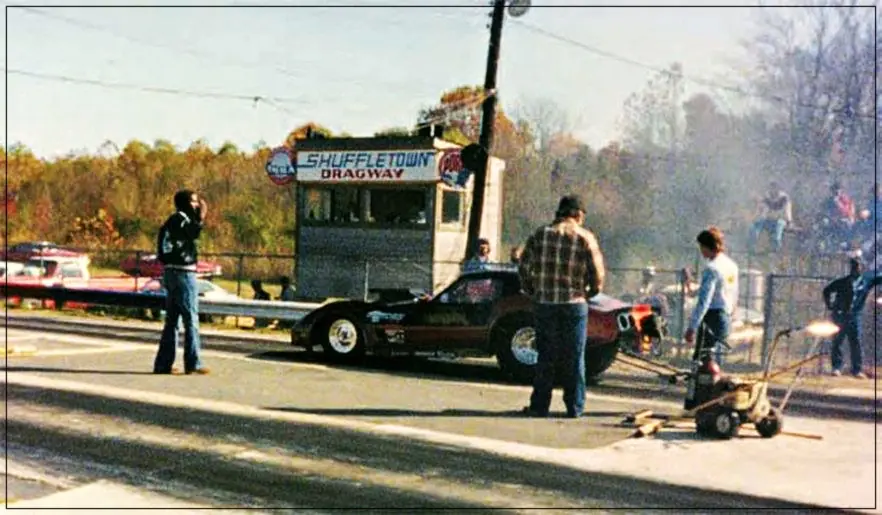
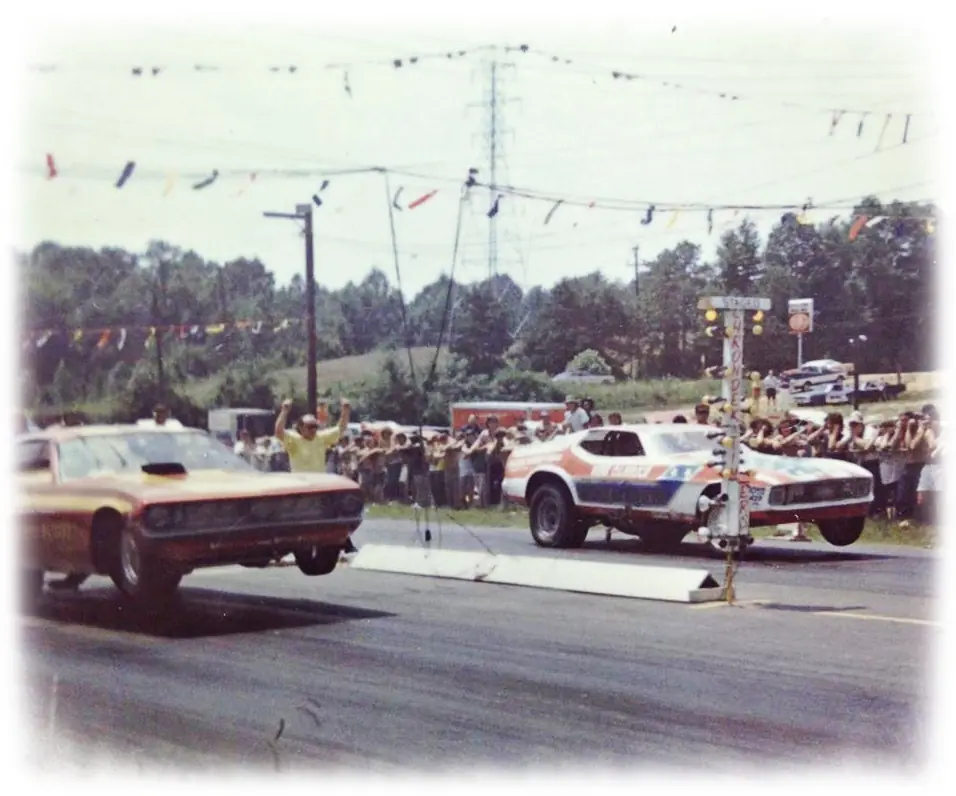
This strip was nine miles west of Charlotte on Highway 16, and old-timers date it to 1959. Frank Spittle, who raced motorcycles there, said it was built beside a creek that year at the Charlotte police department’s request, to get hot rodders off the street. It began as a fifth-mile dirt track and was paved and shortened to an eighth-mile in 1964. Spittle bought a ‘57 Triumph Bonneville in 1963 and over the next 19 years made at least 1,000 passes there on everything from street bikes to twin-engine top fuel Harleys. He remembered a very narrow track with few accidents and not one fatal crash in over 30 years, an original promoter who packed the place, year-round racing when the weather allowed, and a 1969 top draw of Don Garlits against Tommy Ivo. Around 1962 it ran regular Saturday and Sunday programs.
On Sunday, July 30, 1972, Don Helms fell 300 feet to his death when the kite he was riding plunged to the ground at the strip. Owner Tom Ferrell said Helms had been practicing an act he planned to perform at Charlotte Motor Speedway. Mt. Holly barber “Scratch” Whisnant was the promoter, and many old-timers remember announcer Larry Wright.
Spittle believed a change in management in the late 1980s helped close the track. Houses also kept creeping closer. Neighbors tried for years to shut it down and finally did it by getting annexed into Charlotte, which already had noise ordinances. The track is still there, on land now used as a city park.
Video