Shephard Raceway/Calgary International Raceway
Status unknownStatus unknown Closed, but nobody has checked how much of the site survives, or the exact spot was never found.
Also known as Shepard Airport; Shephard Dragway
- Alberta's first official drag strip
- Don Prudhomme made the track's first sub-7-second run, 6.97 at 207.84 mph, in May 1971
- Owner fined under the Lord's Day Act for charging admission on Sundays
- Raced
- 1957-86
- Province
- Alberta
- What's left
- How much of the site survives hasn't been checked yet.
- On the site today
- Industrial park
- Raced on
- A military airfield
- First race
- as early as 1957; Shephard Raceway opened May 20, 1963
- Track
- 1/8 mile from 1981
- Surface
- Gravel runway; first 200 feet paved in 1963
- Location
- Old Shepard airstrip, a 300-acre former wartime training field near Calgary
- People
- Calgary Timing Association, operator (1957-59)
- Calgary Drag Racing Council, leaseholder and race organizer (1959-63)
- Gene McMahon, leaseholder and owner (1963-)
- Sam McMahon, financier (1963)
- Gordon Jenner, co-owner and track manager (1975)
- Sanction
- NHRA
- Elevation
- 3,691 ft (1,125 m)
- Coordinates
- 51.01702, -114.13350
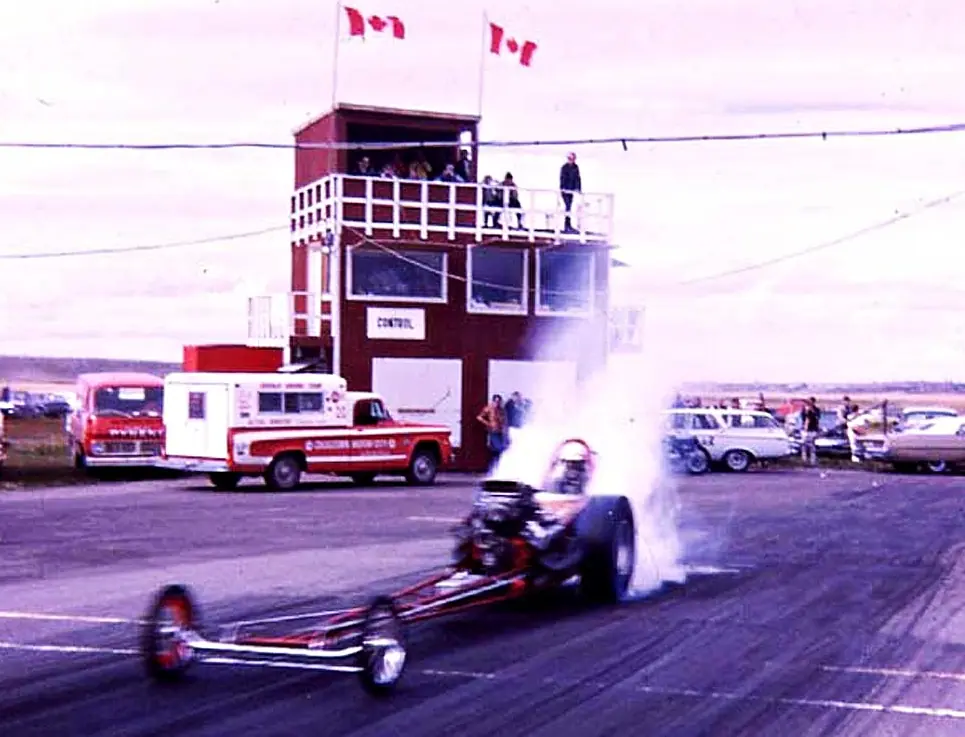
The Calgary Timing Association, formed in 1954, ran Alberta’s first official drag strip at the old Shepard airstrip, where six runways laid out in a triangle had been built for wartime training. Racing there started as early as 1957, though the association hoped for a better site, since the gravel surface damaged paint and the potholes were dangerous. The association didn’t have every car club’s support at events and had more or less stopped functioning, which showed when crowd control became a problem at the 1958 championship race. In January 1959 the Calgary Drag Racing Council formed to coordinate racing better, and in early March the rest of the two-year Shepard lease was transferred to it.
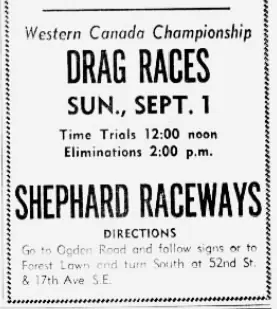
Some time after that lease ran out, Edmonton businessmen led by Gene McMahon got a one-year lease on the 300-acre airstrip from Shell Canada Limited. McMahon had come to Calgary with little more than hopes, having just lost his Edmonton used car lot to bankruptcy. In early 1963 the group proposed that the council run races on summer long weekends. By April, with financing mostly from Gene’s father, Sam McMahon, work had started on improving the old north-south runway. They planned eight races for 1963, with the council running the races and McMahon’s group handling everything else. They named it Shephard Raceway, a slight change from the Shepard spelling. The first 200 feet were paved before the opening race on May 20, 1963, which drew 4,000 people, and Keith Wood’s top fuel dragster posted the meet’s best speed at 150 mph. At the Western Canada championships on September 1, 1963, Richard “Red” Chevalier took top eliminator and set an Alberta gas dragster speed record of 143 mph in front of 3,000 people.
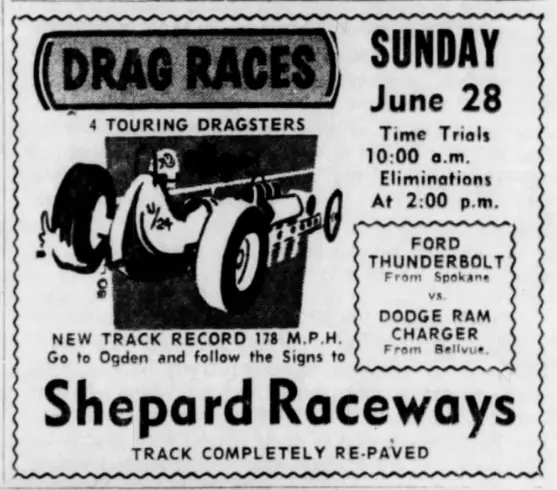
That November McMahon was fined $25 under the Lord’s Day Act, since provincial law banned charging admission to Sunday sporting events. He argued he hadn’t charged admission, only sold one-day associate memberships at the gate. The 1964 season opened on Victoria Day, Monday, May 18, with 3,000 fans, but by June he was back to Sunday races and in trouble again for $1 pit passes that nearly everyone had to buy on June 28. He saw that Sunday racing wouldn’t work under the law. On Saturday, August 1, 1964, Paul Linderman of Bellevue, Alberta, was killed in front of more than 2,000 people when he shifted into reverse by mistake at 120 mph and his car flipped end over end. About 4,500 watched on Labor Day, when half of a record 75 entries came from the U.S. and those cars won every eliminator. By 1965 the track raced on occasional Sundays and on Fridays, Saturdays and weekday holidays. On Victoria Day, May 23, 1966, Frank Pedregon was slightly hurt when his fuel coupe flipped end over end at about 180 mph, after setting a Western Canadian record of 196 mph in his fuel dragster on an earlier run. More than 6,000 people watched over 200 cars that day.
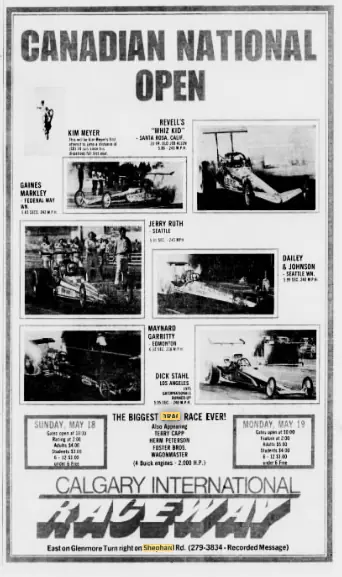
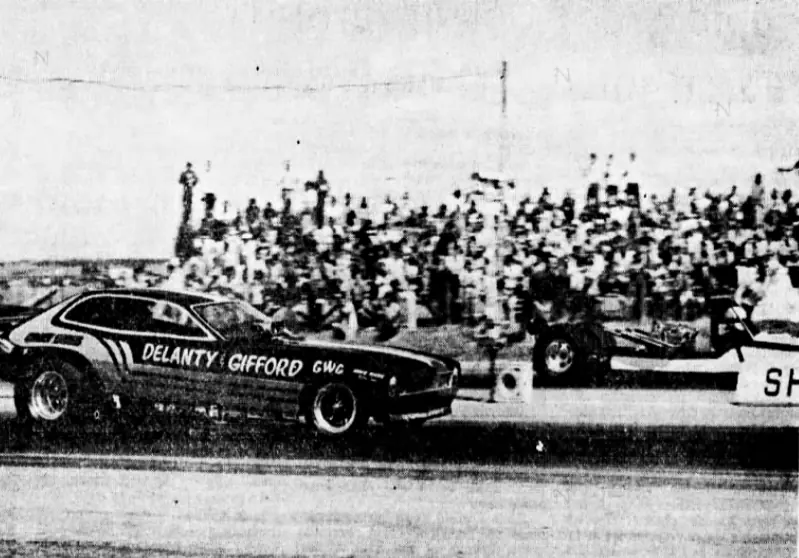
Calgary’s 3,400-foot elevation always held down times and speeds. In May 1971 Don Prudhomme made the first sub-7-second run at Shephard, a 6.97 at 207.84 mph in his funny car. The track was called Shephard Dragway from 1971 to 1974 and added lights in 1972. In 1975 Gordon Jenner, formerly the promoter at Edmonton International Speedway, joined McMahon as co-owner, put in money for improvements and renamed it Calgary International Raceway. He booked stars like Ed McCulloch, Jim Liberman, Jerry Ruth, Tom McEwan and Ray Beadle and hoped for 15,000 at the big events, but crowds never met their expectations and he managed the track for 1975 only. CIR became NHRA-sanctioned in 1976. McMahon kept booking crowd-pleasers but took fewer promotional risks: daredevil motorcyclists, rock concerts, a rocket-powered roller skater, dirt drags, demolition derbies, a stuntman’s championship and even pro rodeo. In 1981 the extension of Deerfoot Trail forced racing down to an eighth mile. The last runway, the north-south one, was removed in 2001 when an industrial park was built.
Video
More in Alberta
- Active Still racing today. Area 53 Raceway (Forestburg) present
- Nothing left No longer racing, and nothing of the track remains. Calgary Highway Drag Racing 1958-60
- Closed No longer racing, but some of the track is still there. Canadian Forces Base Suffield 1973-74
- Active Still racing today. Central Alberta Raceways (Rimbey) present
- Closed No longer racing, but some of the track is still there. De Winton Airfield 1956
- Status unknown Closed, but nobody has checked how much of the site survives, or the exact spot was never found. Edmonton Highway Drag Racing 1958-62
- Closed No longer racing, but some of the track is still there. Fairview Municipal Airport ca. 2000-12
- Status unknown Closed, but nobody has checked how much of the site survives, or the exact spot was never found. Fort Macleod Airport 1968, 1998-99
- Nothing left No longer racing, and nothing of the track remains. Fort McMurray Highway Drag Racing 1977
- Status unknown Closed, but nobody has checked how much of the site survives, or the exact spot was never found. Grande Prairie Airport Drag Wars 2002-3, 2005, 2007, 2009
- Nothing left No longer racing, and nothing of the track remains. High Country Raceway (Lethbridge) 1985
- Nothing left No longer racing, and nothing of the track remains. Lincoln Park Airfield (Calgary) 1962