Dunkirk Airport
ClosedClosed No longer racing, but some of the track is still there.
- First drag race in western New York
- Art Malone ran 187.671 and 195.653 MPH in Garlits' car in 1959, records Garlits later doubted because of the air-hose timing
- 1949 Indy 500 winner Bill Holland was safety director
- Raced
- 1959-62
- State
- New York
- What's left
- A good length of the old track surface is still there, in poor to good condition.
- Raced on
- An airport runway
- First race
- June 14, 1959
- Surface
- Runway
- Location
- Main runway of the Dunkirk airport
- People
- George "Kilroy" Marshman, race director (1959)
- Bill Holland, safety director (1959)
- Elevation
- 669 ft (204 m)
- Coordinates
- 42.49436, -79.27536
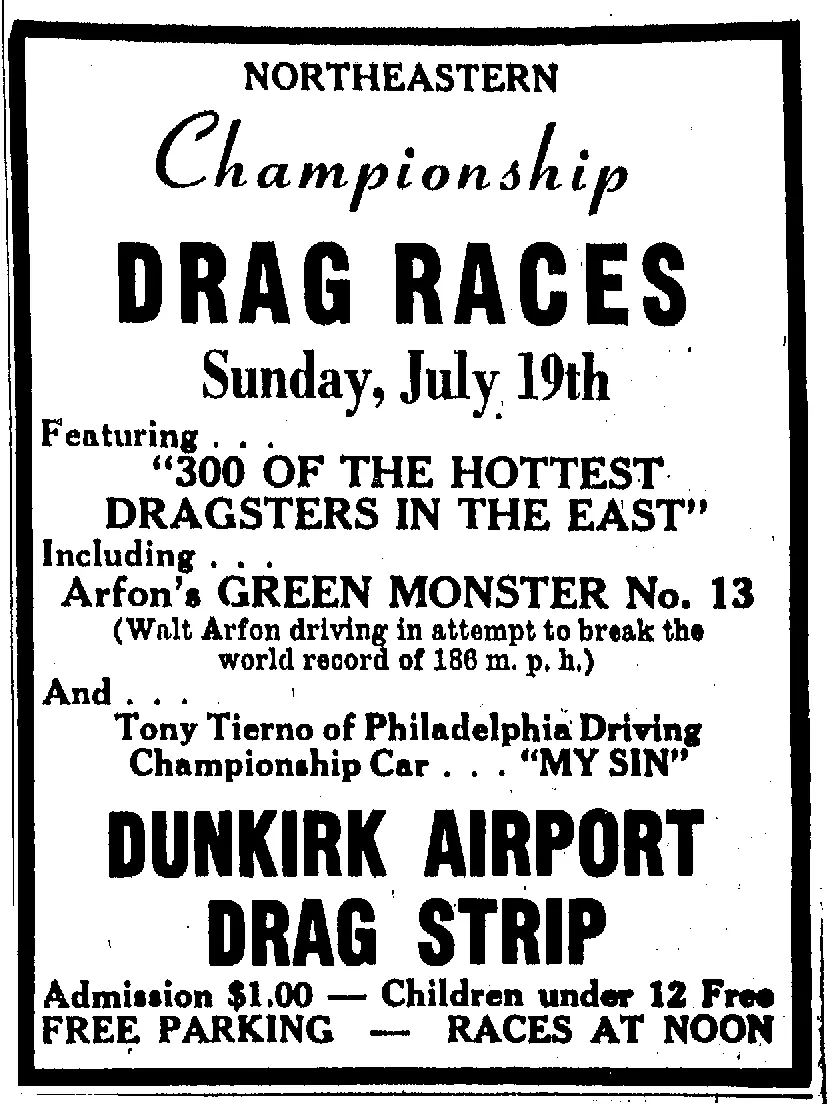
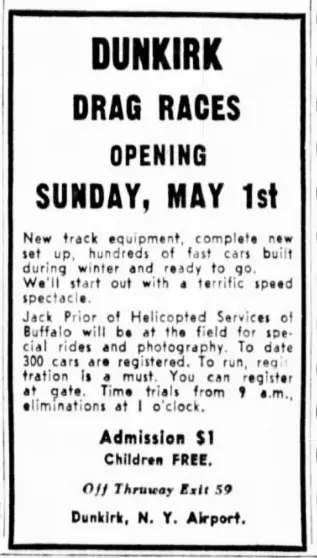
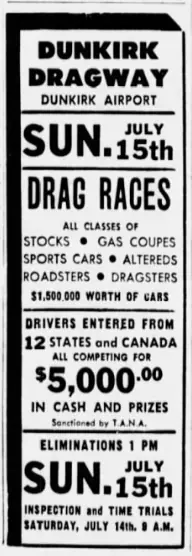
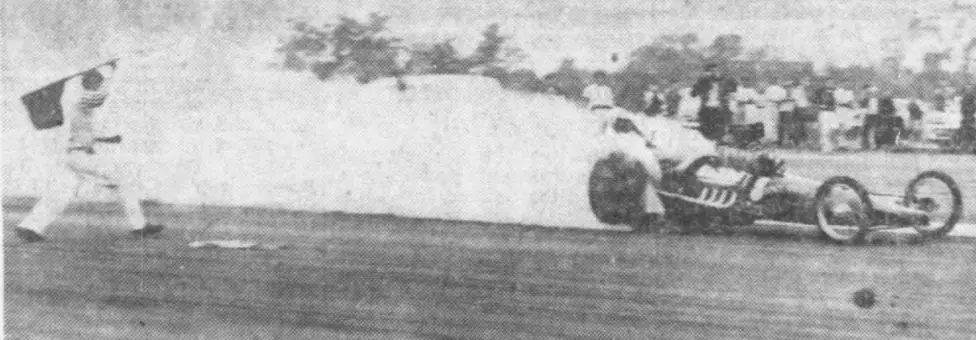
The first race on the main 4,000-foot runway of this old airfield, built around 1943, ran on June 14, 1959. It was also the first drag race in western New York. Busy promoter George “Kilroy” Marshman was race director, and 1949 Indy 500 winner Bill Holland was safety director. Races ran every Sunday, weather permitting, in 33 classes. On July 12, 2,000 people saw three drivers top 100 MPH, led by Don Turner of Rochester at 111 MPH in his B roadster. Joan Cummings of Tonawanda ran 104.75 in her DeSoto-powered Essex Terraplane. Much faster cars soon came from far away. On July 19, 4,000 people watched more than 250 entries, and Jerry Hamman of Niagara Falls set a track record of 183.262 MPH. On August 2, Walt Arfons hurt his feet slightly when the clutch on his Green Monster No. 13 exploded at about 140 MPH, halfway down. On September 27, Art Malone, driving for Don Garlits, set a world record of 187.671 MPH and backed it up with 195.653 before 6,000 people. Odie Smith and Arlen Vanke also set national records. Malone said the track had a heck of a bite.
Garlits later wrote off those records as inaccurate. He said the timing used air hoses stretched across the track like highway traffic counters, and the clocks needed perfectly steady air pressure, which varied enough to give widely different times. On July 24, 1960, Garlits ran 178 MPH but broke and missed the top eliminator final, which Connie Kalitta won. Kalitta stayed another week and won top eliminator again on July 31.
In mid-1961 the mayor complained that the city was left to clean up the airport after races, even though the contract required racers to do it within 24 hours. According to the Dunkirk Evening Observer of June 1, 1962, Richard Peglowski, who worked at the strip in 1961, said the crew cleaned the main runway after every race day. He believed the city had it in for the strip and was grasping for reasons to close it, and that it was foolish to give up the $4,200 a year in rent plus the business racing brought to local restaurants, motels and bars.