Continental Divide Raceway (Castle Rock)
ClosedClosed No longer racing, but some of the track is still there.
Also known as Continental Divide Raceways; CDR; International Columbine Sports Center (planned name)
- Reportedly the first sanctioned drag race with electric cars, in 1968
- Hosted the U.S. Wheelstanding Championships from 1970 to 1972
- Evel Knievel did a full quarter-mile wheelstand here in 1972
- Raced
- 1959-72
- State
- Colorado
- What's left
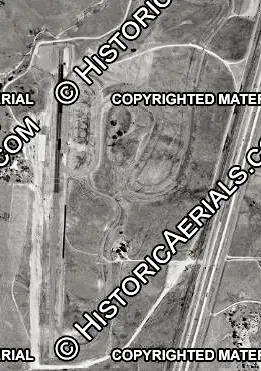
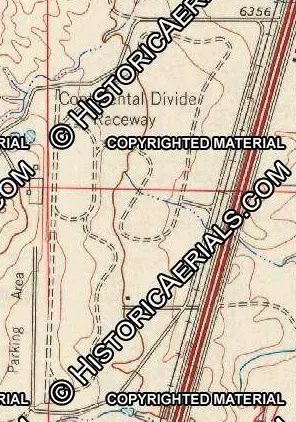
- You can still spot it in aerial photos, or broken pieces of the track surface remain.
- On the site today
- Undeveloped; the outlines of the courses show in aerial photos
- Raced on
- Built as a drag strip
- First race
- July 19, 1959
- Last race
- July 30, 1972 (last found)
- Track
- 1/4 mile
- Surface
- Asphalt (paved 1959, since plowed up)
- Location
- Three miles south of Castle Rock
- People
- W. W. Nail, driving force and founder
- Sid Langsam, president and majority stockholder
- Sanction
- NHRA
- Elevation
- 6,463 ft (1,970 m)
- Coordinates
- 39.33212, -104.88657
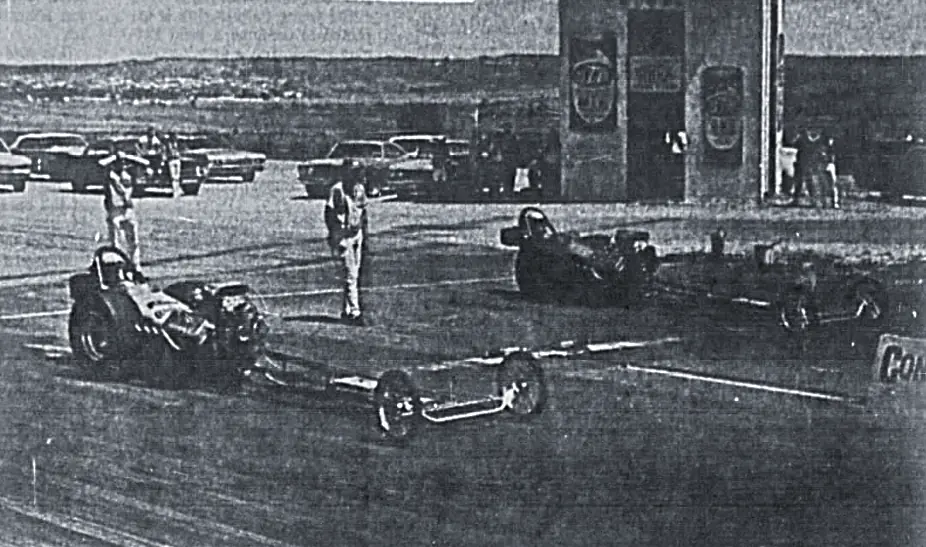
W. W. Nail, president of a construction company, was the driving force behind this complex, and financier Sid Langsam was its president and majority stockholder. Work on the drag strip and sports car road course, on a 1,500-acre site three miles south of Castle Rock, started in late 1956. It was first going to be called the International Columbine Sports Center, but by mid-1959 the name was Continental Divide Raceways. On May 5, 1957, the Colorado Association of Motor Sportsmen held a demonstration with over 200 vehicles on the graded, unpaved strip. Paving was planned for mid-summer but didn’t happen until June 1959. The track opened informally on July 19, 1959, when Ken Lawrence drove Swede Ehrlich’s A dragster to the first top eliminator win at 127.42 mph. By 1960 at the latest it had NHRA sanction and ran monthly.
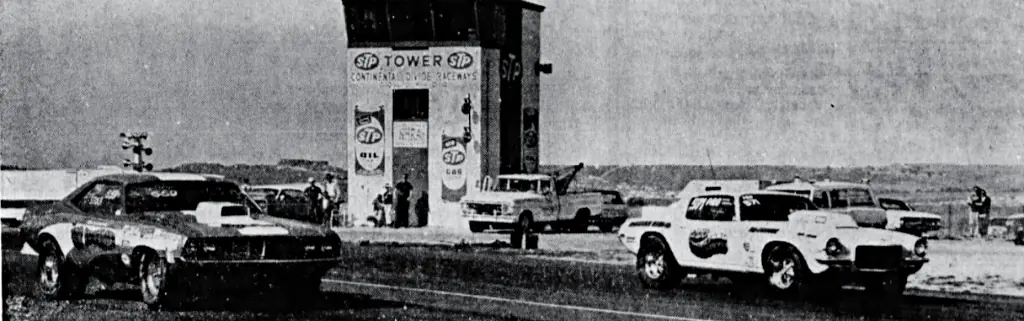
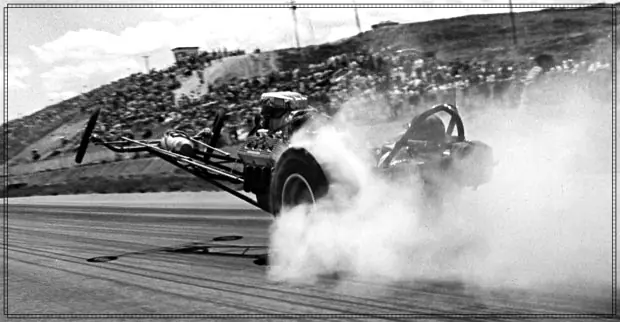
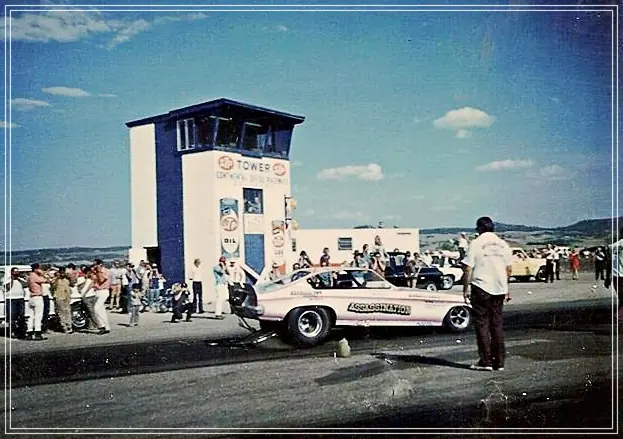
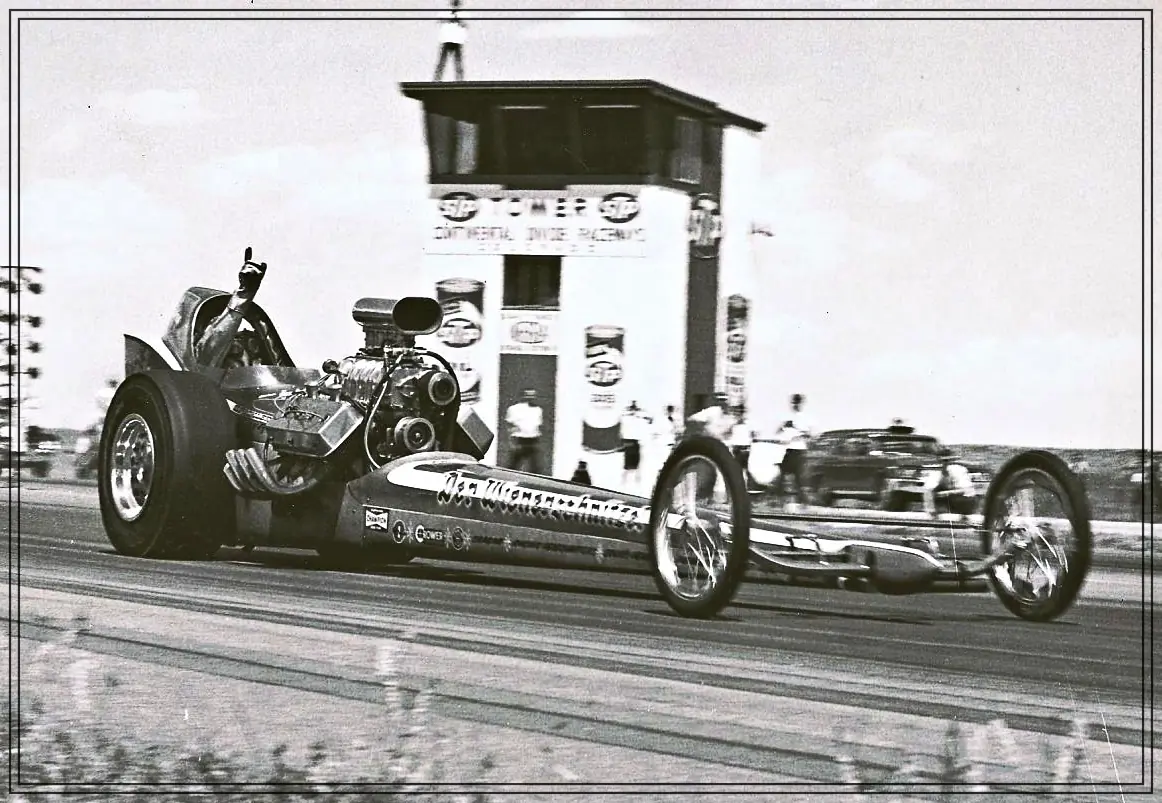
Don Garlits set the track speed record of 191 mph in 1963. By the late 1960s top fuelers such as Mark Williams, Alan Bockla and Mike Dallins were running in the mid 7-second range, and Bockla set the track mark of 7.30 seconds in 1967. After a record crowd of 14,000 in 1966, the track added a 1,500-seat grandstand at the starting line to go with the 6,000 concrete seats on the hillside, plus a two-lane tunnel to the pits, which it advertised as the largest drag racing pits in the country. The 1967 opener on April 23 featured a match race between two Jeep funny cars, Ed Lenarth’s Secret Weapon and Gene Conway’s Destroyer Jeep. At an NHRA divisional points race on September 13, 1968, two electric Renaults were set to run, reportedly the first electric cars in an official sanctioned drag race. Each had twenty 6-volt, 30-kilowatt-hour batteries in the trunk and under the hood, 1,700 pounds of them in all, and was rated at 15 horsepower, with a top speed of 60 mph and 0-40 mph in 10 seconds. Dick Fugler and John Cooke drove them for their employer and the cars’ owner, the Public Service Company of Colorado.
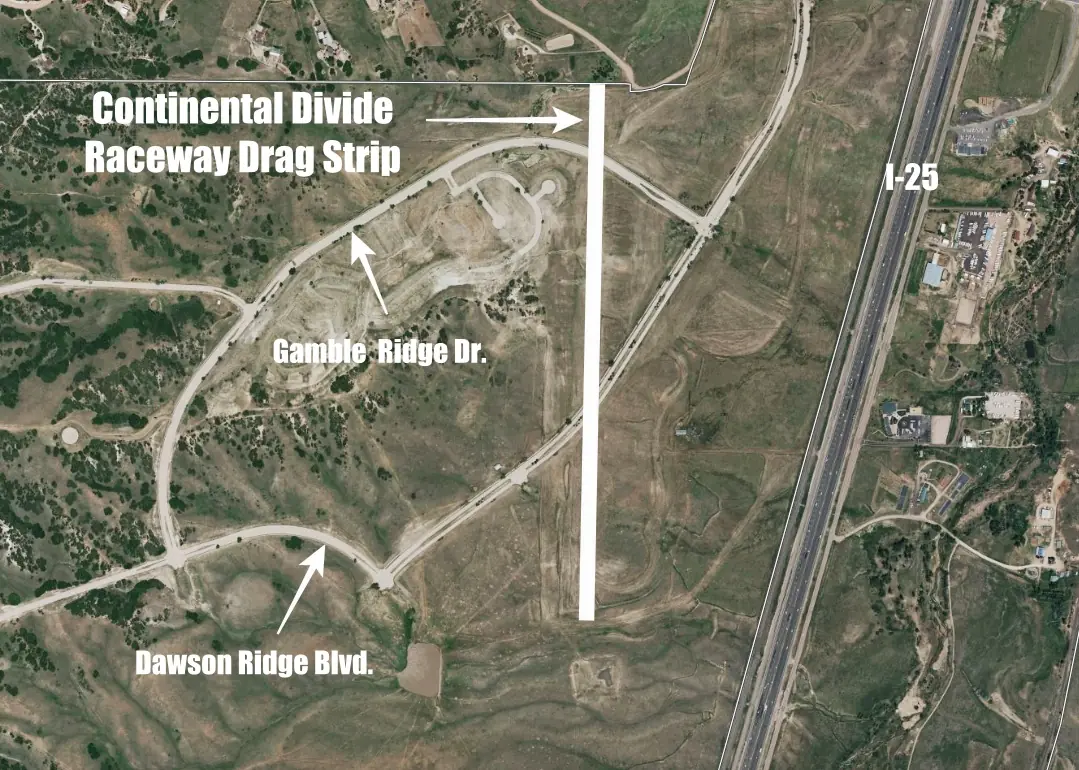
On June 14, 1970, eight of the country’s eleven NHRA-licensed wheelstanders came for a wheelstanding championship, including Bob Riggle’s Hemi Under Glass, Bob Perry’s Fugitive Corvette and Dick Harding’s Back Up Pick Up. Perry won that year and again in 1971, and the U.S. Wheelstanding Championships ran a third time in 1972. Only OCIR in California and CDR held such events. At a spring 1971 funny car race Don Prudhomme set a track mark of 7.470, and on September 12, 1971 he ran his wedge dragster against Don Garlits in a top fuel match race. On July 30, 1972, Evel Knievel did a wheelstand the full quarter mile. No later drag racing at CDR has been found, though the road course stayed in use until the early 1980s. The complex was sold around 1983 for real estate development that never happened. The asphalt was plowed up, but the outline of both courses still shows in aerial photos.

More in Colorado
- Closed No longer racing, but some of the track is still there. Bandimere Speedway (Morrison) 1958-2024
- Closed No longer racing, but some of the track is still there. Boulder Timing Association Drag Strip ca. 1957-1960s
- Nothing left No longer racing, and nothing of the track remains. Centennial Drag Strip (Littleton) 1953-54
- Closed No longer racing, but some of the track is still there. Century 21 Raceway (Aurora) 1971-73
- Status unknown Closed, but nobody has checked how much of the site survives, or the exact spot was never found. Colorado City Dragway 1974
- Nothing left No longer racing, and nothing of the track remains. Colorado Springs Drag Strip 1960-62
- Closed No longer racing, but some of the track is still there. Colorado Springs International Speedway 1976-81, 1983
- Nothing left No longer racing, and nothing of the track remains. Firebugs Drag Strip (Grand Junction) 1955
- Active Still racing today. Julesburg Drag Strip 1958-present
- Nothing left No longer racing, and nothing of the track remains. Lowry Air Force Base 1954-55
- Active Still racing today. Midway Drag Strip/Western Colorado Dragway (Grand Junction) 1959-present
- Nothing left No longer racing, and nothing of the track remains. Mountain View Dragway/Mile High Raceway Park (Erie) ca. 1966-71