Bandimere Speedway (Morrison)
ClosedClosed No longer racing, but some of the track is still there.
Also known as Safety Proving Grounds of America
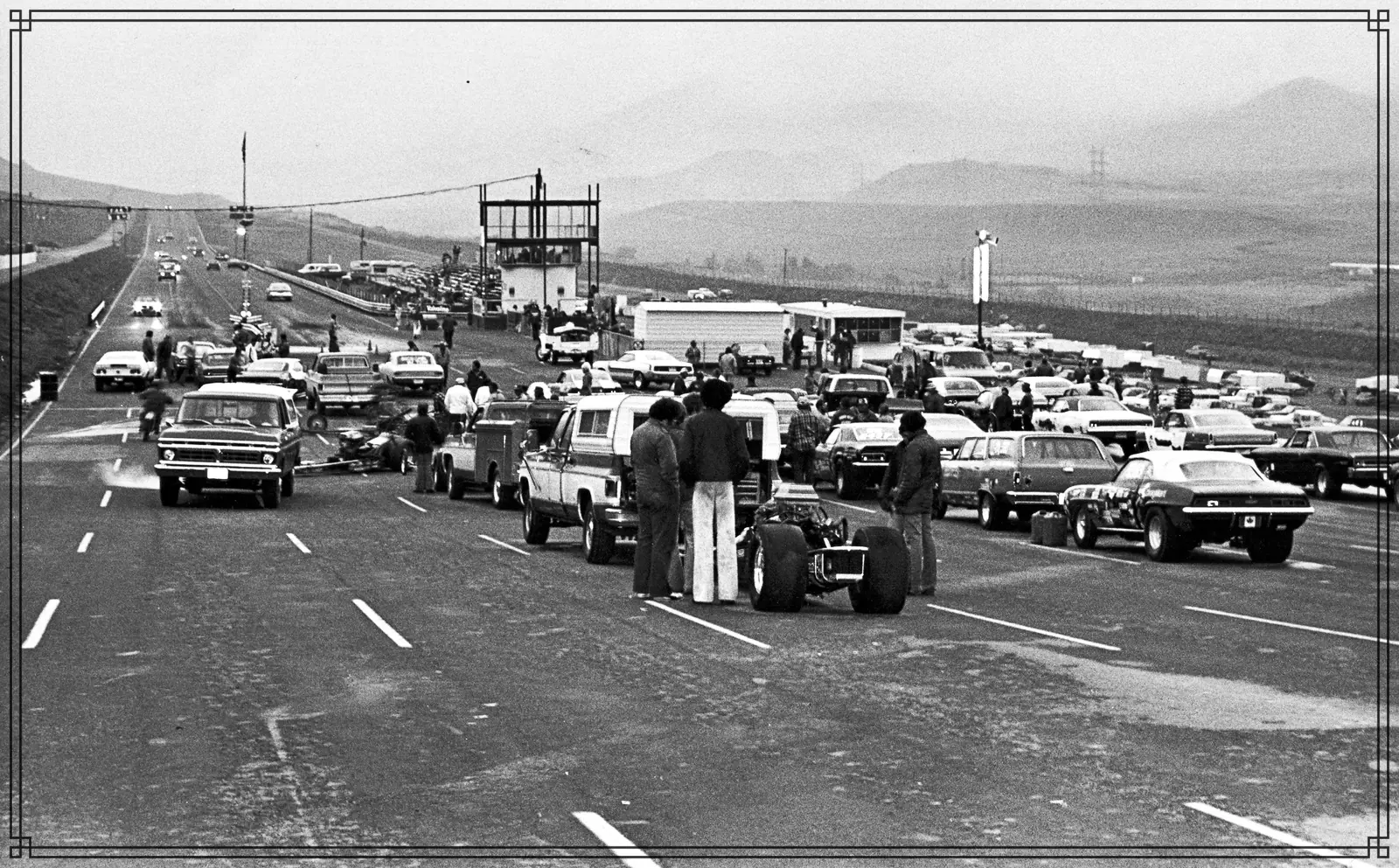
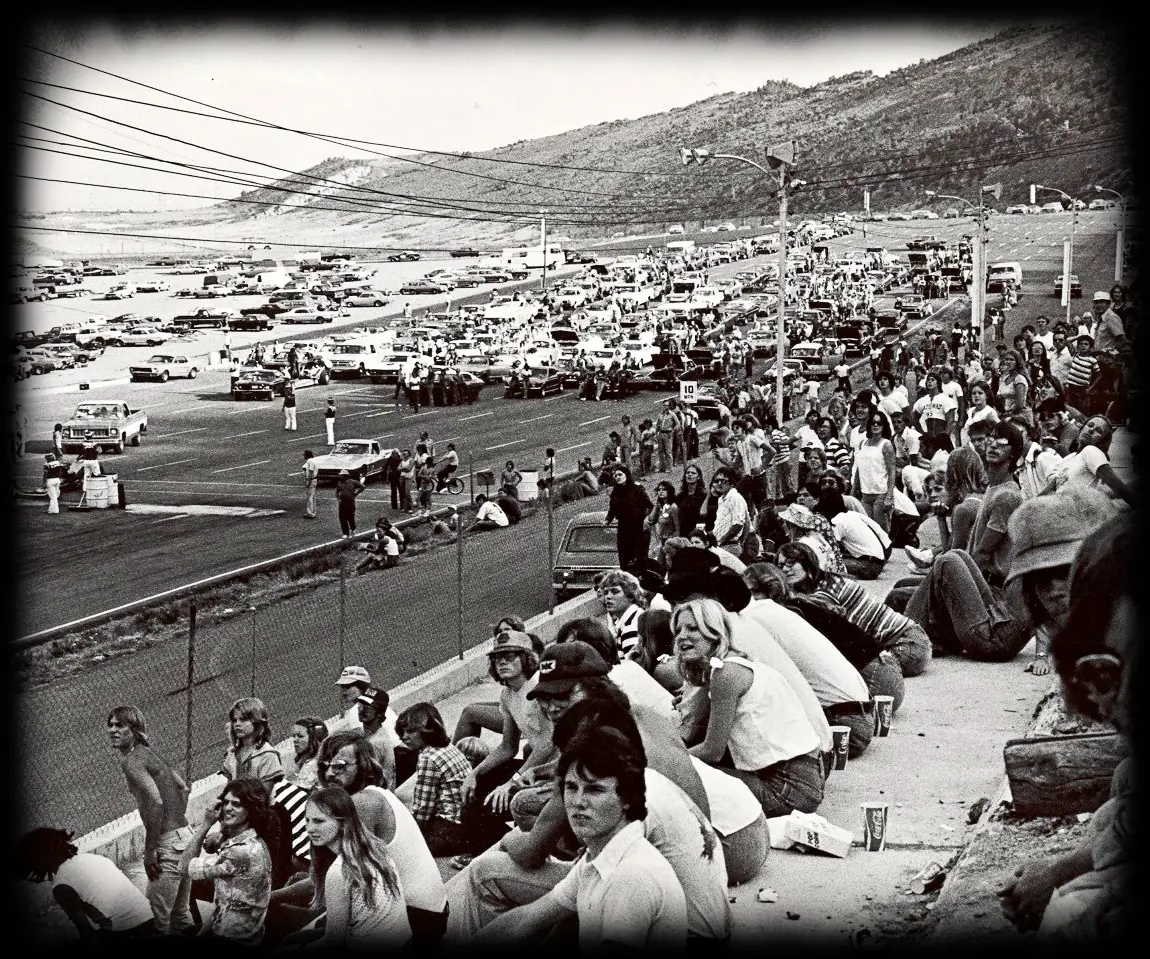
"Thunder Mountain" ran on a hillside west of Denver for 65 years and hosted the NHRA Mile-High Nationals. The family shut the Morrison track down after racing ended in 2024, and crews started tearing down the buildings, timing tower included, in June 2026. The Bandimeres are planning a new track near Hudson in Weld County. The town approved the annexation and zoning in April 2026, and engineering and traffic studies are still under way.
- Home of NHRA's Mile-High Nationals from 1978
- Grandstands grew to more than 23,500 seats after a $4 million rebuild in 1988
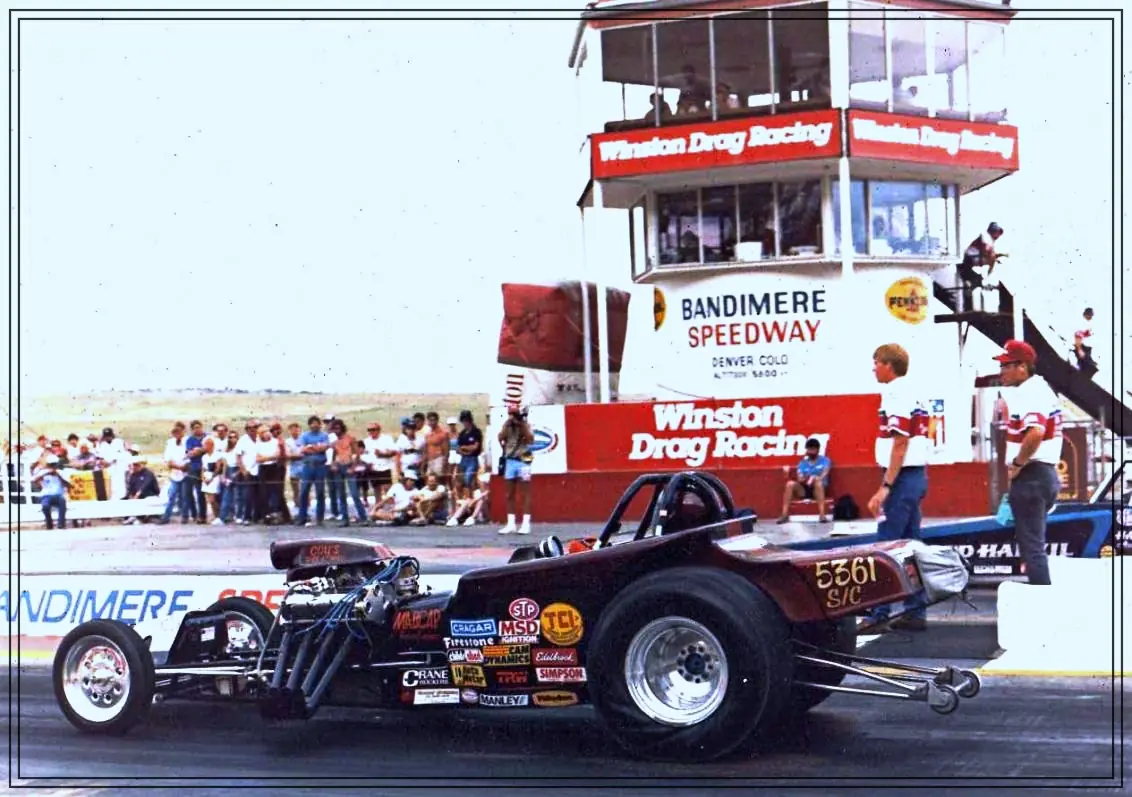
- Original timing tower was shaped like a spark plug
- Raced
- 1958-2024
- State
- Colorado
- What's left
- A good length of the old track surface is still there, in poor to good condition.
- On the site today
- Buildings demolished in mid-2026
- Raced on
- Built as a drag strip
- Last race
- late 2024
- Surface
- Concrete (since 2008)
- Location
- West side of Denver, against the Hogback
- People
- John Bandimere Sr., founder and builder (1958)
- Bandimere family, owners (1958-2024)
- Sanction
- NHRA
- Elevation
- 5,887 ft (1,794 m)
- Coordinates
- 39.66387, -105.18920
- Contact
- bandimere.com
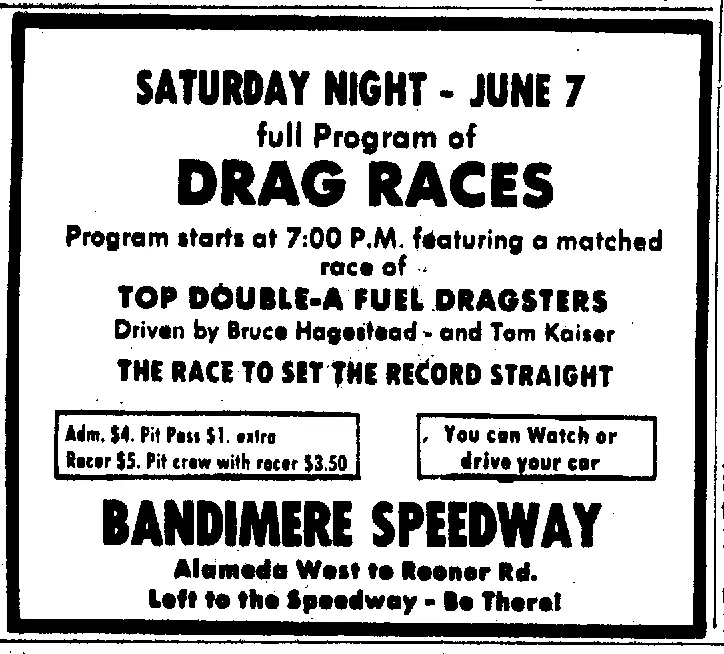
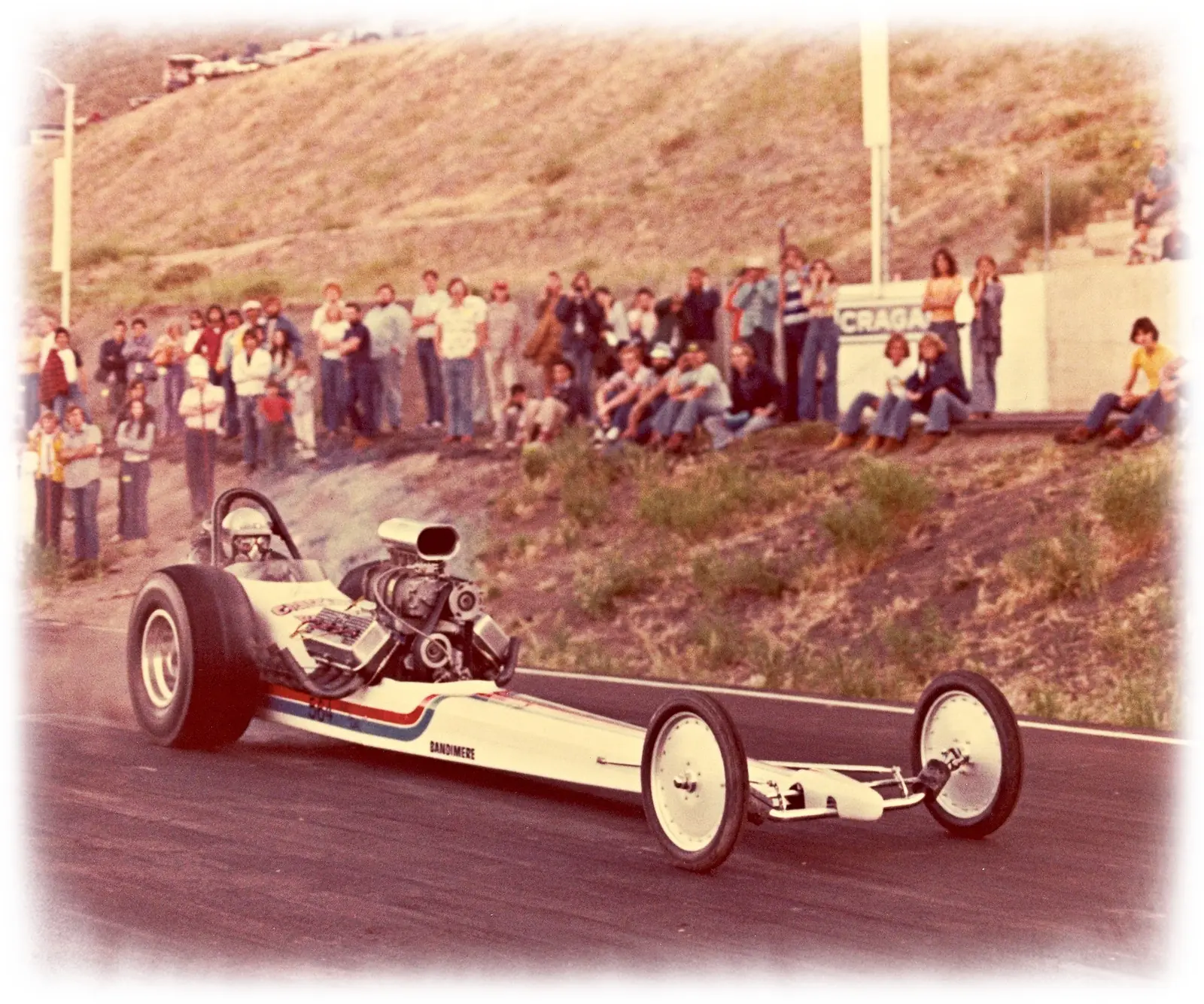
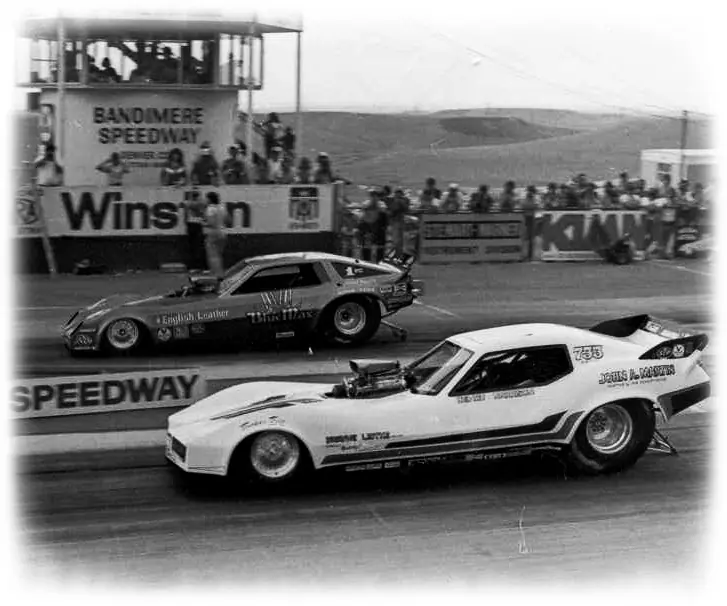
John Bandimere Sr. bought land on the west side of Denver in 1958, up against the Hogback at the foot of the Rocky Mountains. He and his family built a small, efficient drag strip to support their auto parts business and to give young people a safe place to learn about cars and race them off the streets, which had long been his dream. It ran as an unsanctioned independent track, first called Safety Proving Grounds of America, until NHRA sanctioned it in 1968. NHRA’s Mile-High Nationals started in 1978, later run as the Mopar Mile-High NHRA Nationals. In 1988 the family sat out a year of the national event schedule for a $4 million rebuild that added seating, better pits, parking and access, and better sponsor signage, and grandstand capacity grew from about 8,000 to more than 23,500. Almost every original building was replaced over the years, including the timing tower built to look like a spark plug, and the event schedule grew to nearly ten times its original size. In 2008 the track was repaved entirely in concrete, with a cooling system under the launch pad. Encroaching homes and lack of room ended racing after the 2023 season, and the track closed for good in October 2024, and the old buildings were demolished in mid-2026. The owners bought land in Hudson, Colorado, planning to rebuild.
Video
More in Colorado
- Closed No longer racing, but some of the track is still there. Boulder Timing Association Drag Strip ca. 1957-1960s
- Nothing left No longer racing, and nothing of the track remains. Centennial Drag Strip (Littleton) 1953-54
- Closed No longer racing, but some of the track is still there. Century 21 Raceway (Aurora) 1971-73
- Status unknown Closed, but nobody has checked how much of the site survives, or the exact spot was never found. Colorado City Dragway 1974
- Nothing left No longer racing, and nothing of the track remains. Colorado Springs Drag Strip 1960-62
- Closed No longer racing, but some of the track is still there. Colorado Springs International Speedway 1976-81, 1983
- Closed No longer racing, but some of the track is still there. Continental Divide Raceway (Castle Rock) 1959-72
- Nothing left No longer racing, and nothing of the track remains. Firebugs Drag Strip (Grand Junction) 1955
- Active Still racing today. Julesburg Drag Strip 1958-present
- Nothing left No longer racing, and nothing of the track remains. Lowry Air Force Base 1954-55
- Active Still racing today. Midway Drag Strip/Western Colorado Dragway (Grand Junction) 1959-present
- Nothing left No longer racing, and nothing of the track remains. Mountain View Dragway/Mile High Raceway Park (Erie) ca. 1966-71