Austin Raceway Park/Austin Dragway Park
Nothing leftNothing left No longer racing, and nothing of the track remains.
Also known as ARP
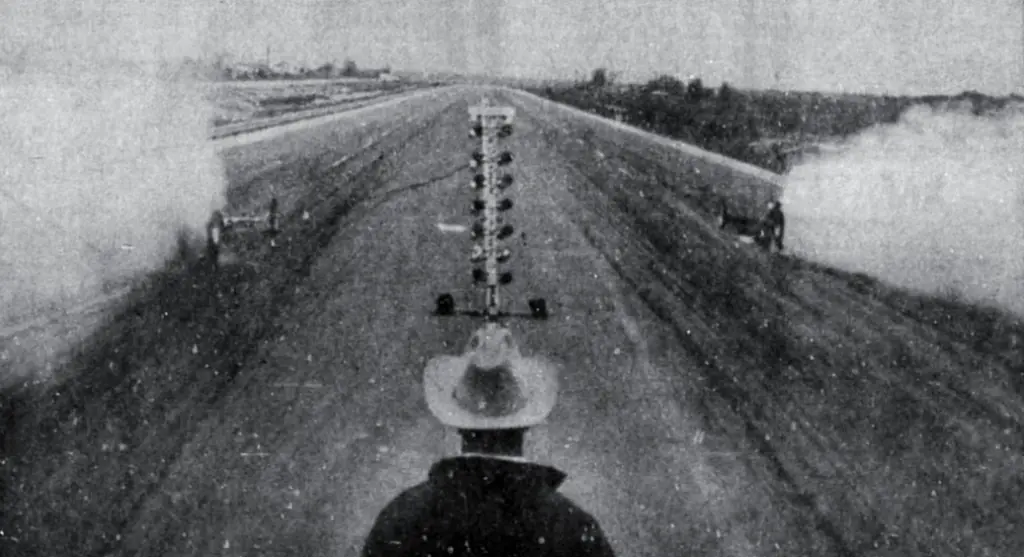
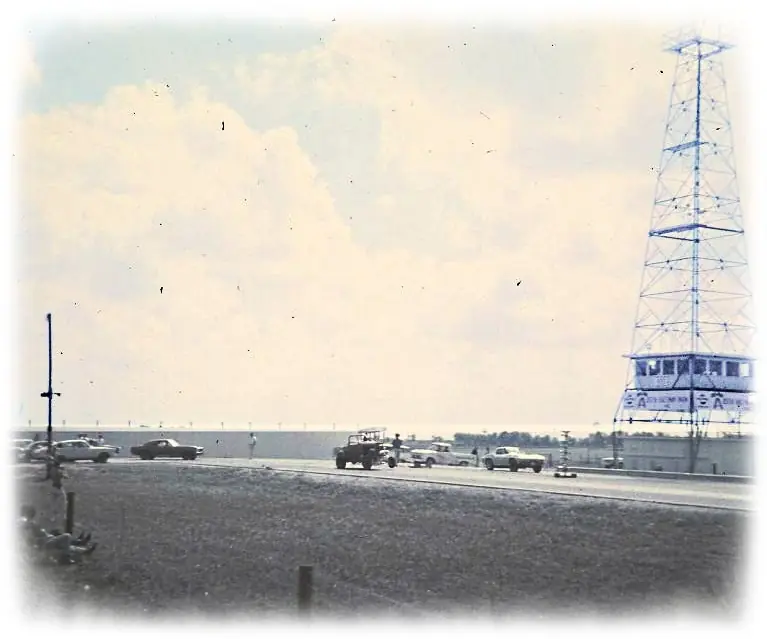
- The timing tower was a converted oil derrick
- NHRA divisional meets there ran past midnight three years in a row
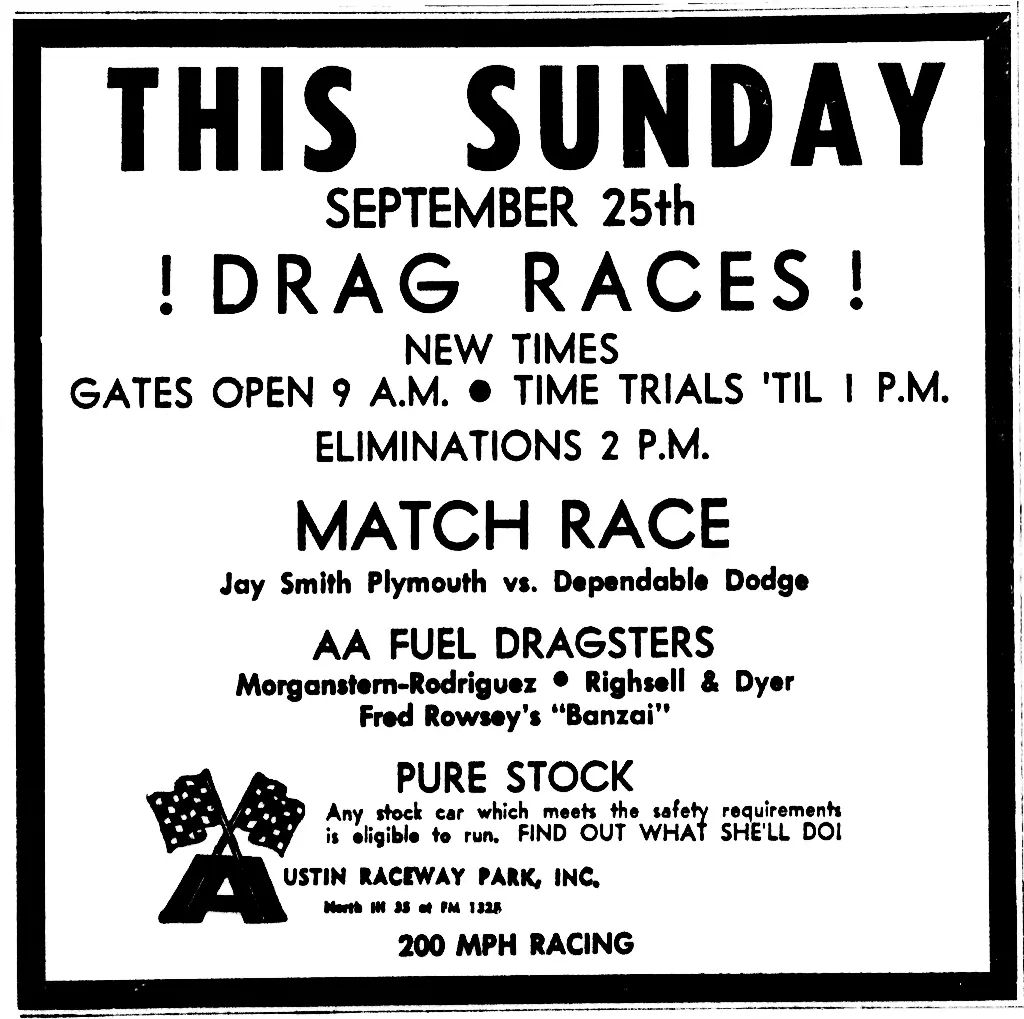
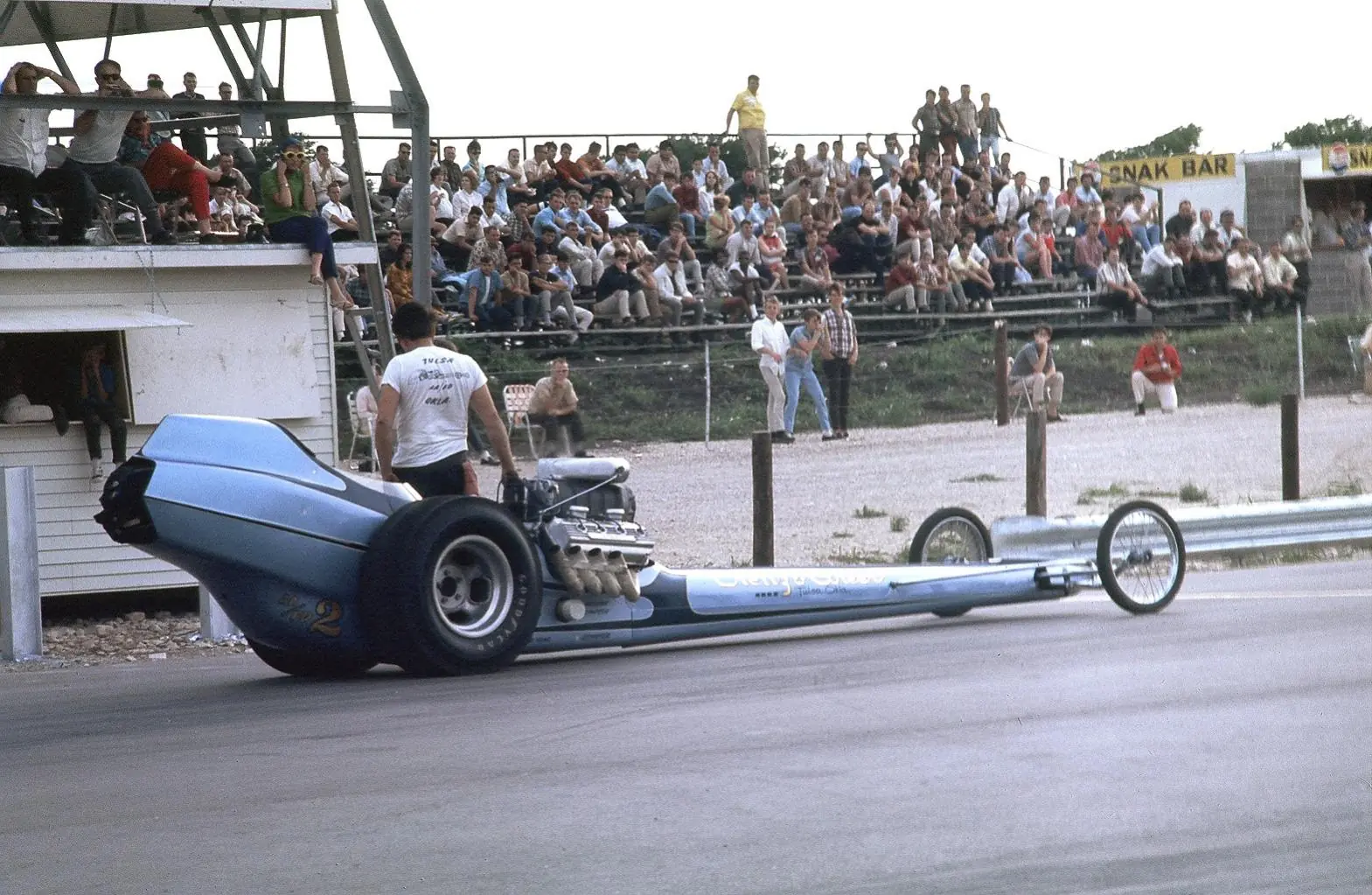
- George Cox set a 7.25 at 209.75 MPH strip record in the Banzai II in 1967
- Raced
- 1966-70
- State
- Texas
- What's left
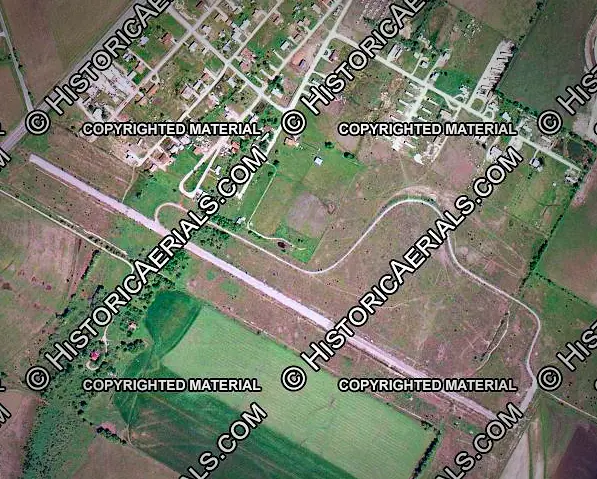
- The site was redeveloped and nothing of the strip remains.
- On the site today
- Business park and housing subdivision; part of the starting area is Meadow Lane
- Raced on
- Built as a drag strip
- First race
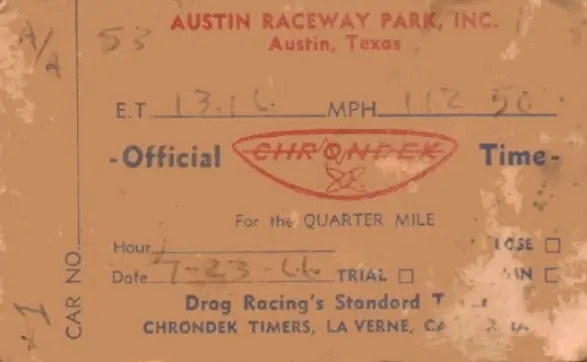
- July 23, 1966
- Last race
- April 12, 1970
- Track
- 1/4 mile
- Surface
- Paved
- Location
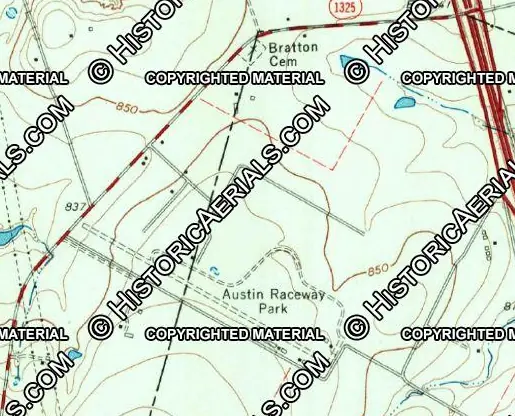
- I-35 and FM 1325, nine miles north of Austin
- People
- Alvis Vandigriff, investor (1966)
- Bob Parris, track manager (1966)
- Grant Verhulst, track manager
- Jim Baldwin, lessee (1968-69)
- Norman Gregg, lessee (1968-69)
- Guy Morgan, operator (1969-70)
- Sanction
- NHRA
- Elevation
- 862 ft (263 m)
- Coordinates
- 30.47006, -97.68225
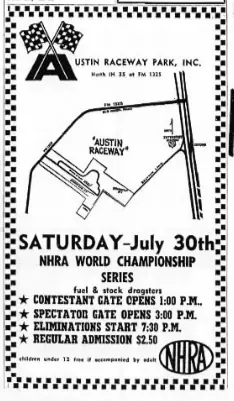
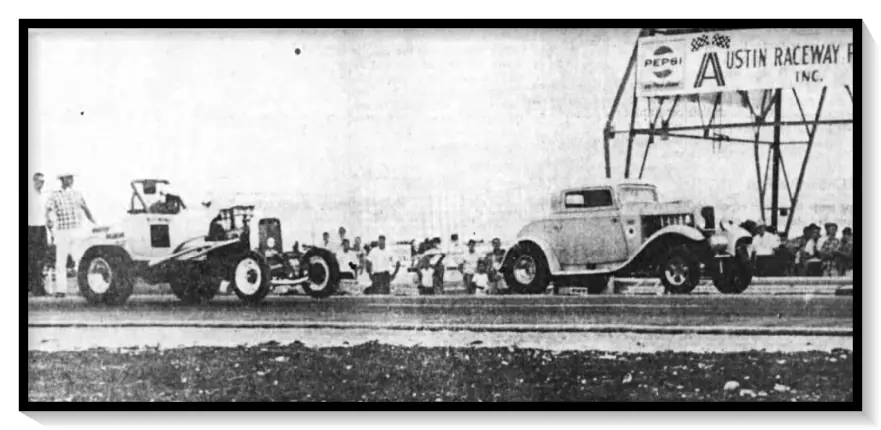
The drag strip and a sports car road course were built on 120 acres nine miles north of Austin at I-35 and FM 1325. Ten unnamed local backers put up the money, possibly with some help from the Armstrong Johnson Ford dealership. Nearby residents sued to stop construction and lost, though appeals dragged the case into 1967. The first race, on July 23, 1966, drew almost 9,000 fans. The pavement at the end of the strip roughened during time trials, so top fuel cars were held to 1,000 feet instead of 1,320. That kept them under 200 MPH, the speed at which the track had promised $1,000 to the first racer to reach it. Eddie Baumann of San Antonio beat three other fuelers for top fuel, and Gene Snow set a C/FD national record despite complaints about traction. A week later the track hosted an NHRA divisional meet, where on-and-off rain pushed racing past midnight and hurt attendance, times and speeds. Fred Swanda won top fuel and had top speed in time trials at 189.06 MPH. The rain-plagued first season ended on December 18. The timing tower was an old oil derrick put to new use.
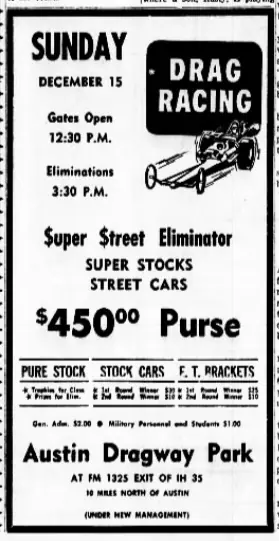
The second NHRA divisional points race, on July 22, 1967, again ran until almost two hours past midnight, and only a few hundred of the 11,600 spectators stayed for the last round. Richard Tharp won top fuel in the Carroll Brothers AA fuel dragster, and George Cox set a strip record of 7.25 at 209.75 MPH in time trials in Fred Rowsey’s “Banzai II.” The third divisional meet, on Saturday, July 20, 1968, drew more than 10,000 paying fans and over 400 racers, but delays including three accidents kept it going until 2 a.m., the third straight year the race ran past midnight. Dwight Salisbury won top fuel in the Beach Boys AA fuel dragster. Bob Ward set a funny car track record of 7.87 at 193.26 MPH on August 24, 1968. A midweek show on Wednesday, September 25, 1968, with four wheelstanders including Wild Bill Shrewsberry flopped at the gate. On November 1, 1968, Jim Baldwin and Norman Gregg leased the track for a year, renamed it Austin Dragway Park and stayed with NHRA. Oddly, one change was letting Chevrolet-powered cars race, which hadn’t been allowed before. Car counts and crowds still never really improved. Guy Morgan joined Gregg as a partner in July 1969 and took over alone when Gregg pulled out in early August. The last event was a motorcycle road and drag race on April 12, 1970, sponsored by the Southwest Motorcycle Racing Association.
A man who worked there at 15 during the first season was paid to sit at the finish line in an old Army Jeep with an Army walkie-talkie and keep teenagers out, which amused him even then. Bob Parris was the first track manager, later replaced by Grant Verhulst, and San Antonio DJ Ricci Ware announced for a while. He got the job because Alvis Vandigriff, a lawyer friend of his father, mentioned over dinner that he’d done something crazy and invested in the strip. Cars raced south to north toward FM 1325, with the oil derrick on the west side and a sand trap right up against the road. The track was flat but ran slightly downhill past the finish line. He remembered a homebuilt Corvette funny car on its first outing whose brakes failed and chute didn’t open. It ran downhill through the barbed wire fence and clipped the back of a ‘57 Chevy on 1325, and the driver was fine but his car was reduced to pieces. Another racer recalled the Little Red Wagon, which did wheelstands dragging its tailgate, being blown over by the wind on a regular Sunday.
Accounts differ on why the track closed after so few years. A nearby dairy farmer may have gotten an injunction because he believed his cows gave less milk the day after a race. Tax payment problems are a likelier reason, and worries about cars running off the end onto or over FM 1325 may also have played a part. A business park and subdivision have wiped out the track except for part of the starting area, which is now Meadow Lane.
More in Texas
- Closed No longer racing, but some of the track is still there. Abernathy Municipal Airport 1958-60
- Closed No longer racing, but some of the track is still there. Abilene Dragway/Big Country Raceway 1964-75
- Closed No longer racing, but some of the track is still there. Abilene Municipal Airport 1954-57
- Closed No longer racing, but some of the track is still there. Alamo Dragway (San Antonio) 1974-96
- Active Still racing today. Amarillo Dragway 1960-present
- Closed No longer racing, but some of the track is still there. Andrews County Airport (Andrews) 1966-69
- Closed No longer racing, but some of the track is still there. Angleton Dragway/Raceway 2003-10
- Closed No longer racing, but some of the track is still there. Aransas County Airport (Rockport) 1957-58
- Nothing left No longer racing, and nothing of the track remains. Ascarate Park (El Paso) 1960-61
- Closed No longer racing, but some of the track is still there. Bergstrom Air Force Base (Austin) 1954
- Closed No longer racing, but some of the track is still there. Big Bend Drag Strip (Alpine) 1968
- Status unknown Closed, but nobody has checked how much of the site survives, or the exact spot was never found. Brazos Valley Raceway (Mineral Wells) 1964-68